It began with an Italian class
DO YOU BELIEVE IN GOD? / THE BEGINNING
Rosalind and I were taking Italian one night a week at our local high school in Queens. Eventually our teacher was Fra Domenico - Brother Dominic, a Franciscan friar. During winter break he asked whether the class would like to go to Italy with him. We would stay locally, take the subway, practice our Italian and find our way around Rome. Of course, he would also take us to the Vatican.
CAMPFIRE STORY

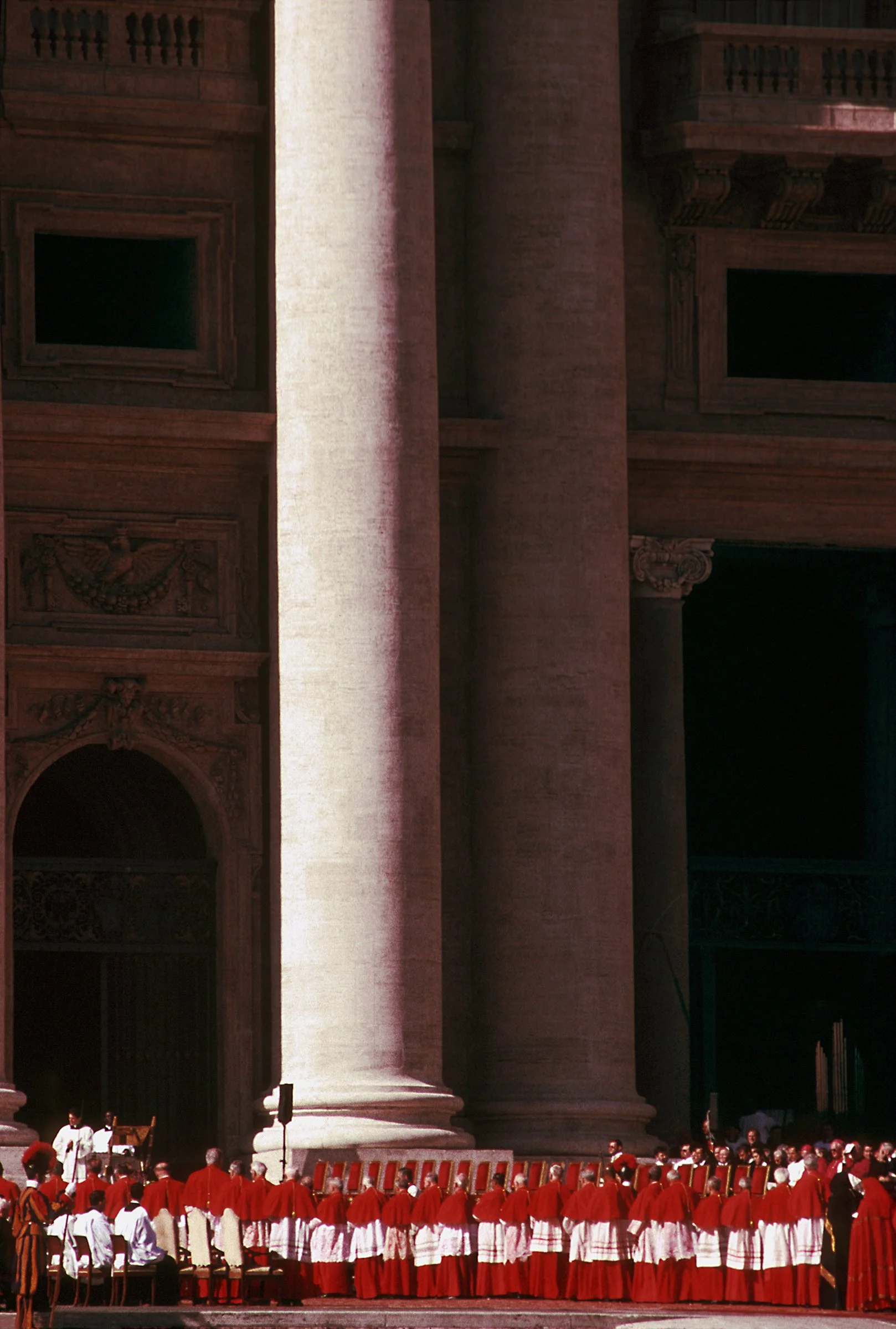
Ceremony becomes an image
ROME
Pope John Paul II was creating 44 new cardinals from around the world. St. Peter's Square was packed. I worked my way toward the back of the enormous crowd, climbed up on a pole and photographed the procession. Nearby I found something quieter and just as fascinating: a shop selling ecclesiastical clothing, displayed with all the elegance and craftsmanship of Italian fashion. At the time, these were simply things that caught my eye.
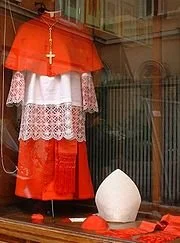
Red, white, hierarchy, costume, ceremony - the visual language was already there.
FROM PHOTOGRAPH TO FORM
The cardinals change
Years later, the images came back. I began drawing cardinals. But the imposing figures of the Vatican changed as I worked. They became almost childlike - simple outlines, enormous hats, bright red robes and tiny faces with very human expressions. One smiles. One scowls. One looks suspicious. One wears sunglasses. They are funny, yet they still carry the visual authority of the institution they represent.
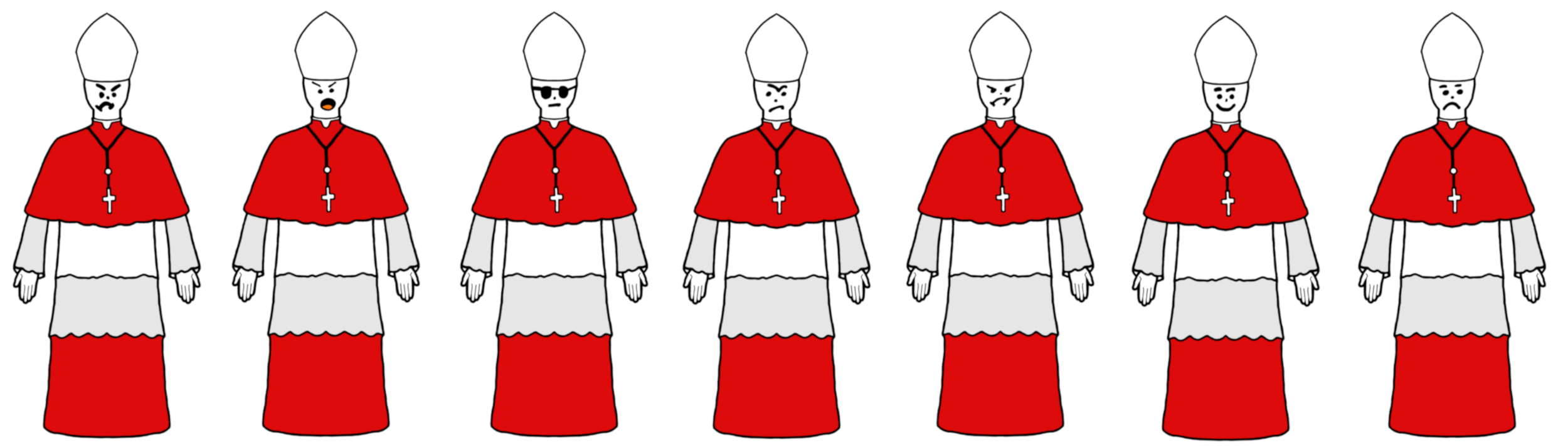
Individual expressions become characters; the rosary begins to connect them.
THE FIGURES STEP OFF THE WALL
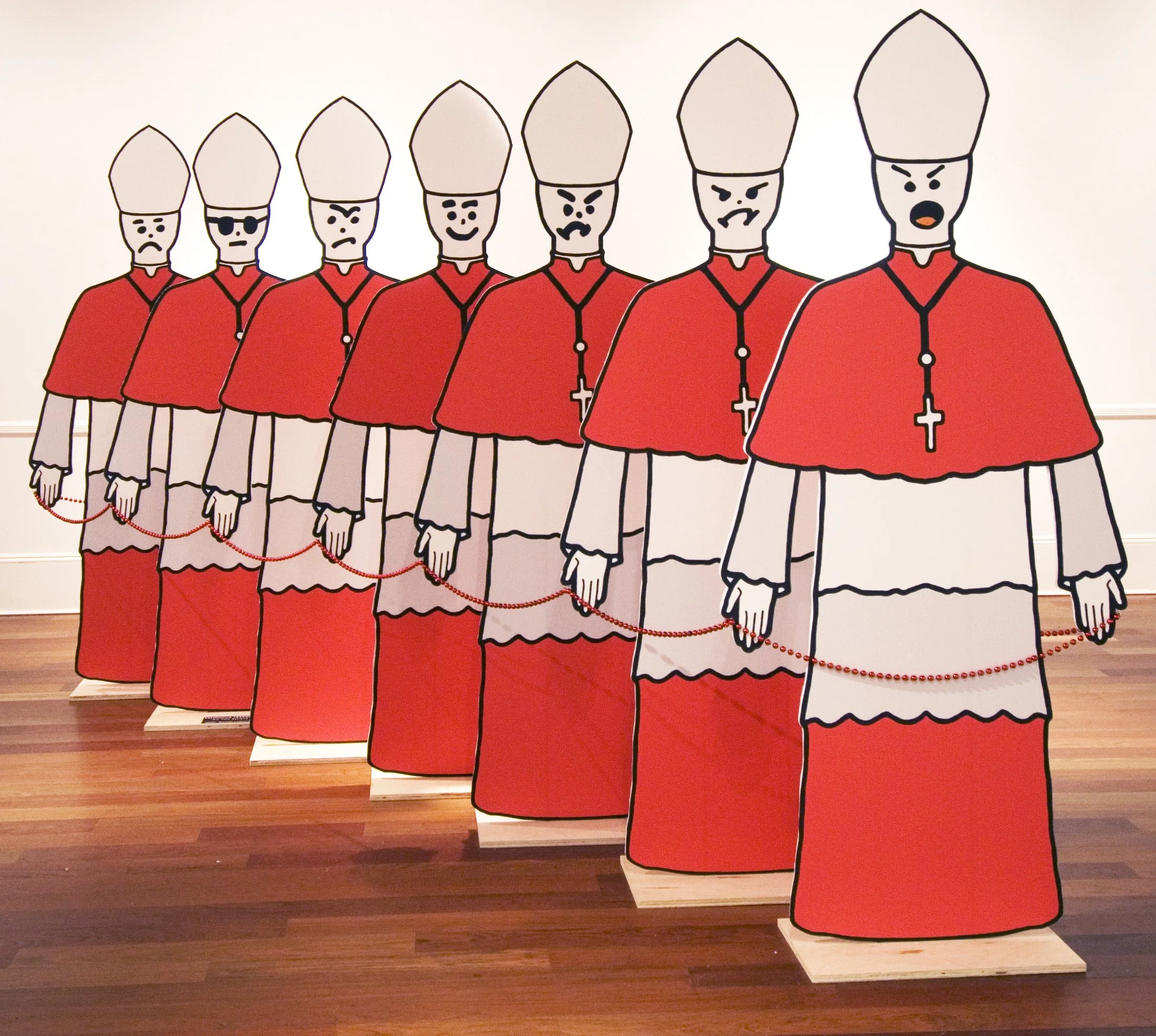
A procession
The first had been A Mind of Enlightenment.
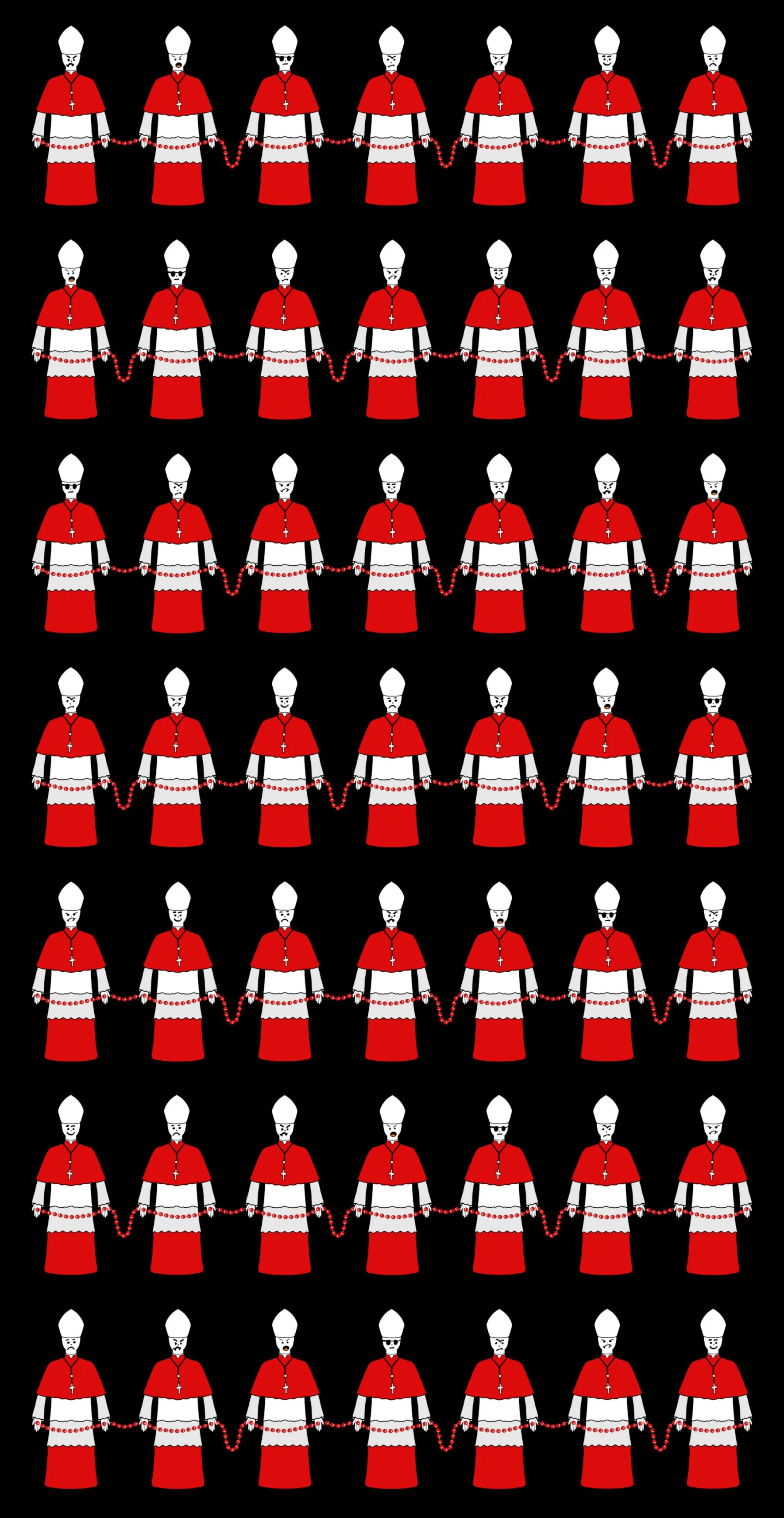
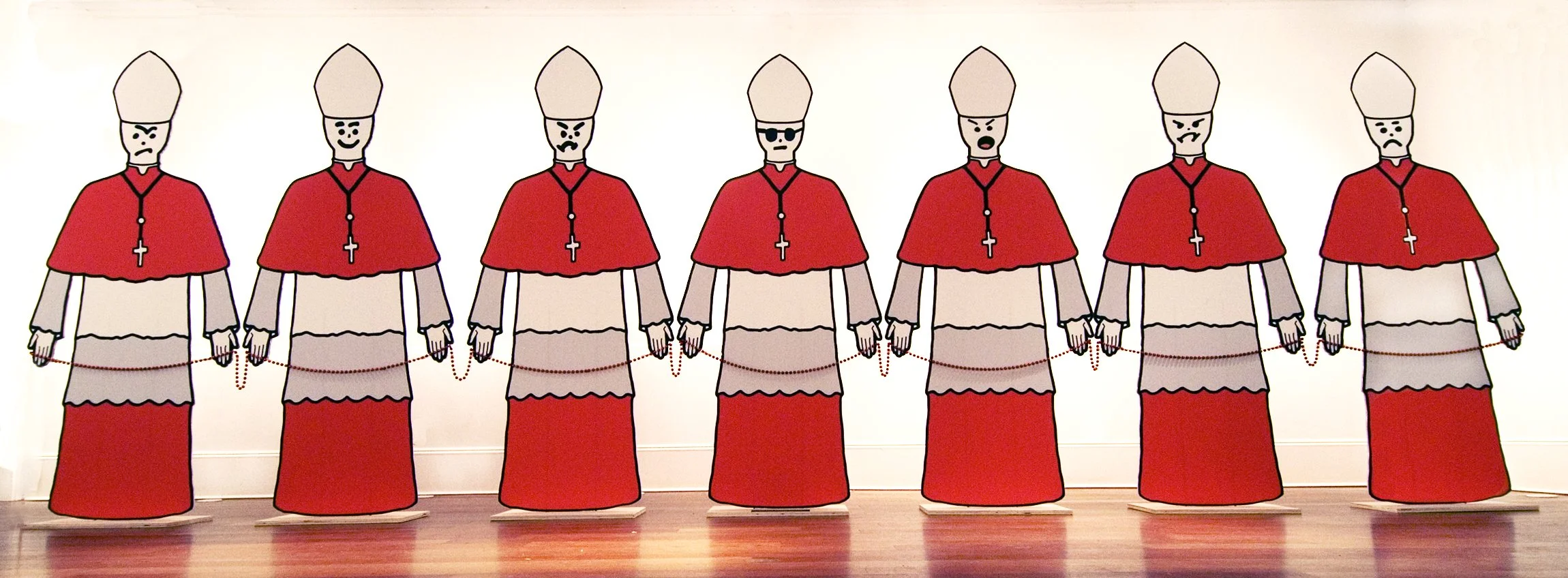
Then the figures became life-size objects occupying the same space as the viewer. Seven cardinals. I connected them with a rosary. Suddenly they weren't simply seven individuals. They were a procession - a group, a structure, a system of belief made physical.
ANOTHER PART OF MY LIFE ENTERS
The question changes
By this time I had been studying Buddhism. It was asking me to begin with experience - mind, perception, causes and conditions -rather than necessarily beginning with an explanation outside ourselves. That made me curious about something much larger: Why did human beings create the idea of God? Was it our difficulty accepting impermanence? Our desire for something that survives death? A source of comfort, authority or power? I wasn't trying to answer those questions. I was becoming interested in asking them.
The question occupies the room
IN THE GALLERY
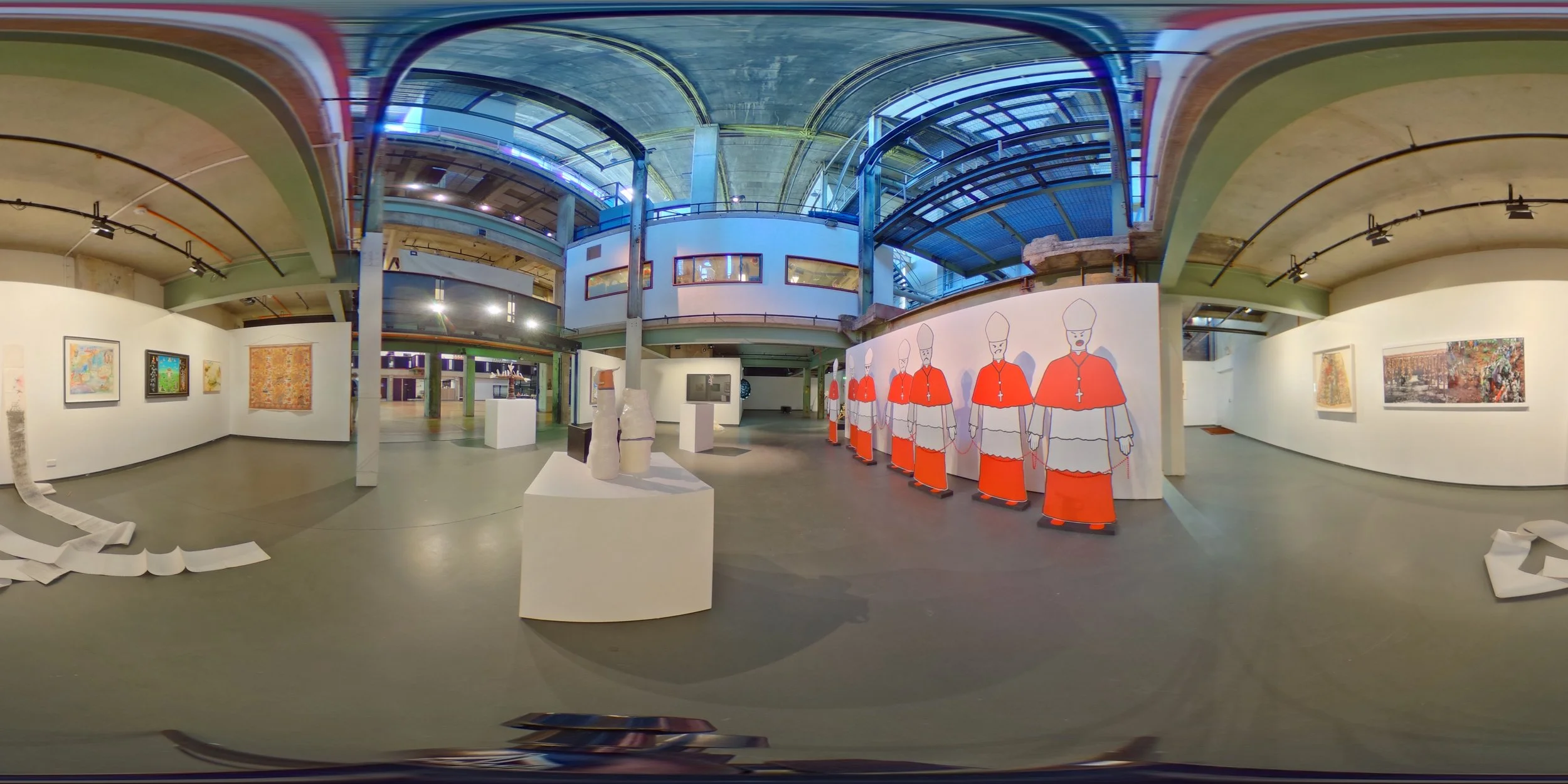
At human scale the cardinals become a little congregation of their own. From one direction they read almost like a frieze. Move around them and they become a procession. On the website, the three-dimensional view can be moved, allowing the viewer to circle the work rather than simply see another still photograph.
THE BLAKE PRIZE
The question travels
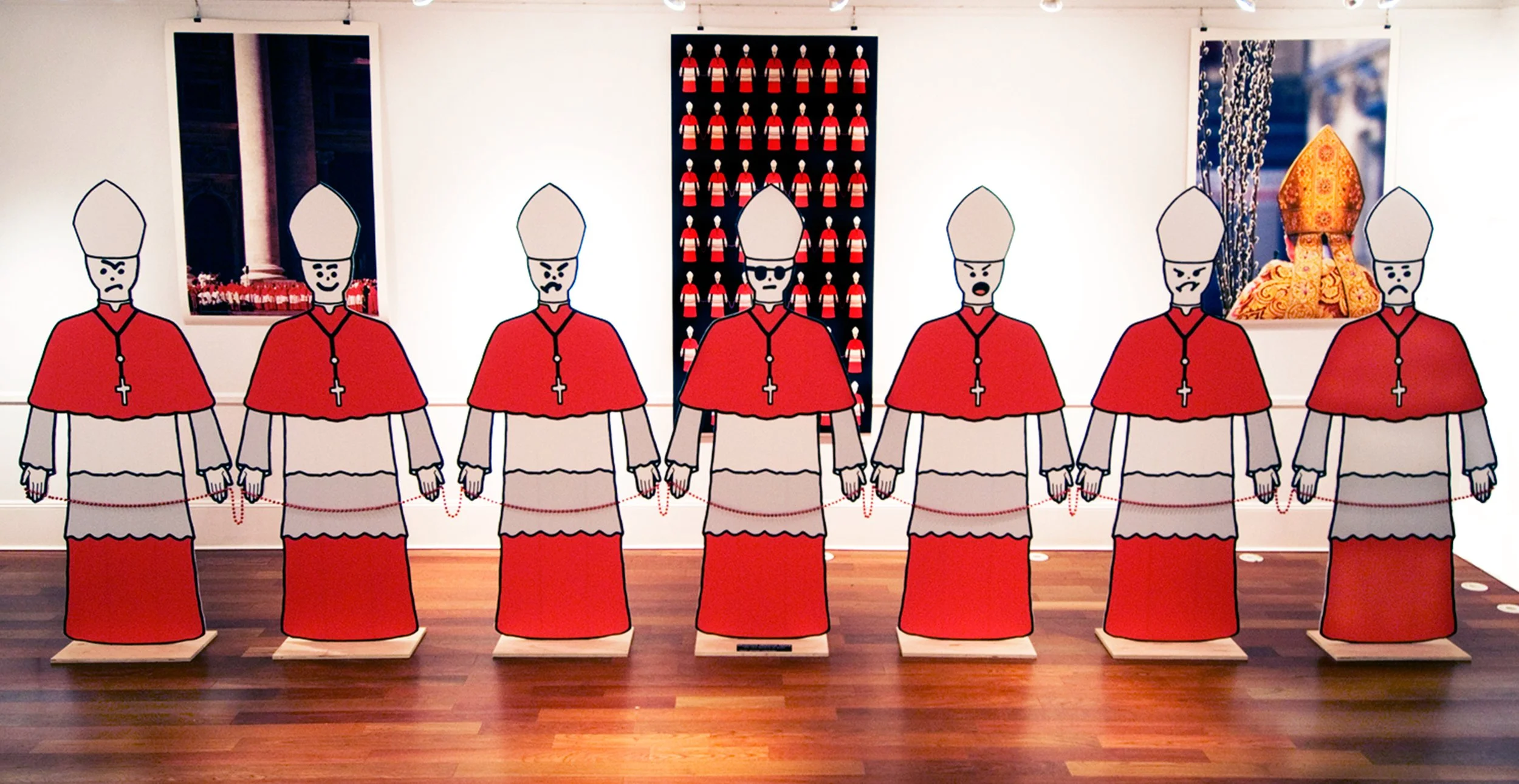
In 2016, Do You Believe in God? was selected as a finalist for the Blake Prize in Australia, a long-running prize devoted to art exploring spirituality, religion and belief. It was my second time as a Blake Prize finalist. That mattered to me because the Blake Prize seemed tailor-made for the way I was thinking. It did not require belief or disbelief. The work could embrace religion, question it, challenge it, or approach spirituality from somewhere else entirely.
Do You Believe in God? continued the inquiry from another direction. The artwork does not tell the viewer what to believe. It leaves the question open.
DO YOU BELIEVE IN GOD?
The answer belongs to the viewer.