MICHAEL CARDACINO
DRAGONFLY PORTAL
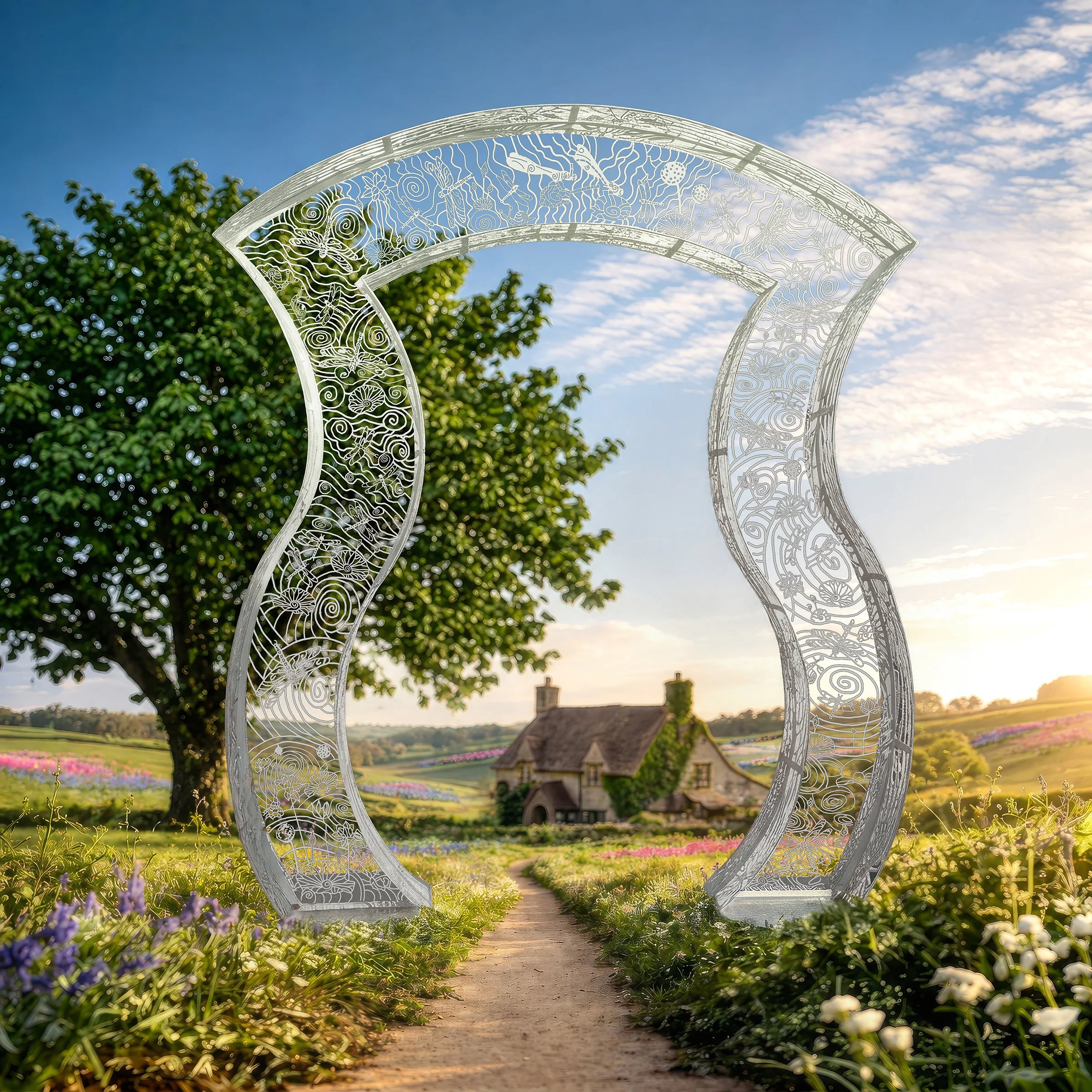
A drawing becomes a place you can enter.
Visualization of the portal in a landscape
THE LIVING FORM
The starting point was not architecture. It was the dragonfly itself - its long body, transparent wings, and the extraordinary geometry that appears when two bodies meet.
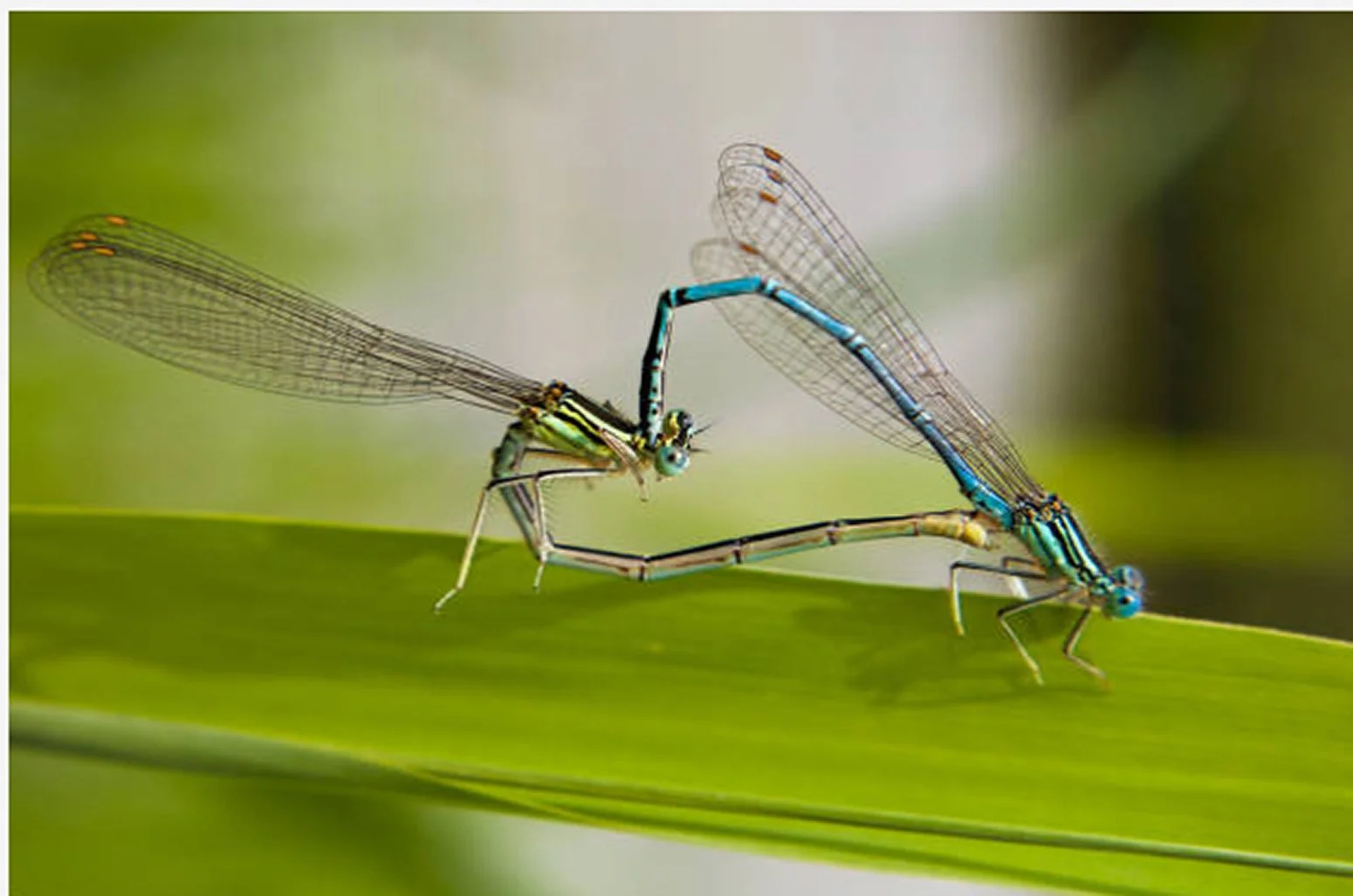
The portal grows out of that observation. The natural form is not copied literally; it becomes a vocabulary of wings, spirals, water, insects and movement.
THE HAND
I drew the imagery myself. The dragonflies, snails, shells, water lines and spirals began as marks on paper before any of them became metal.
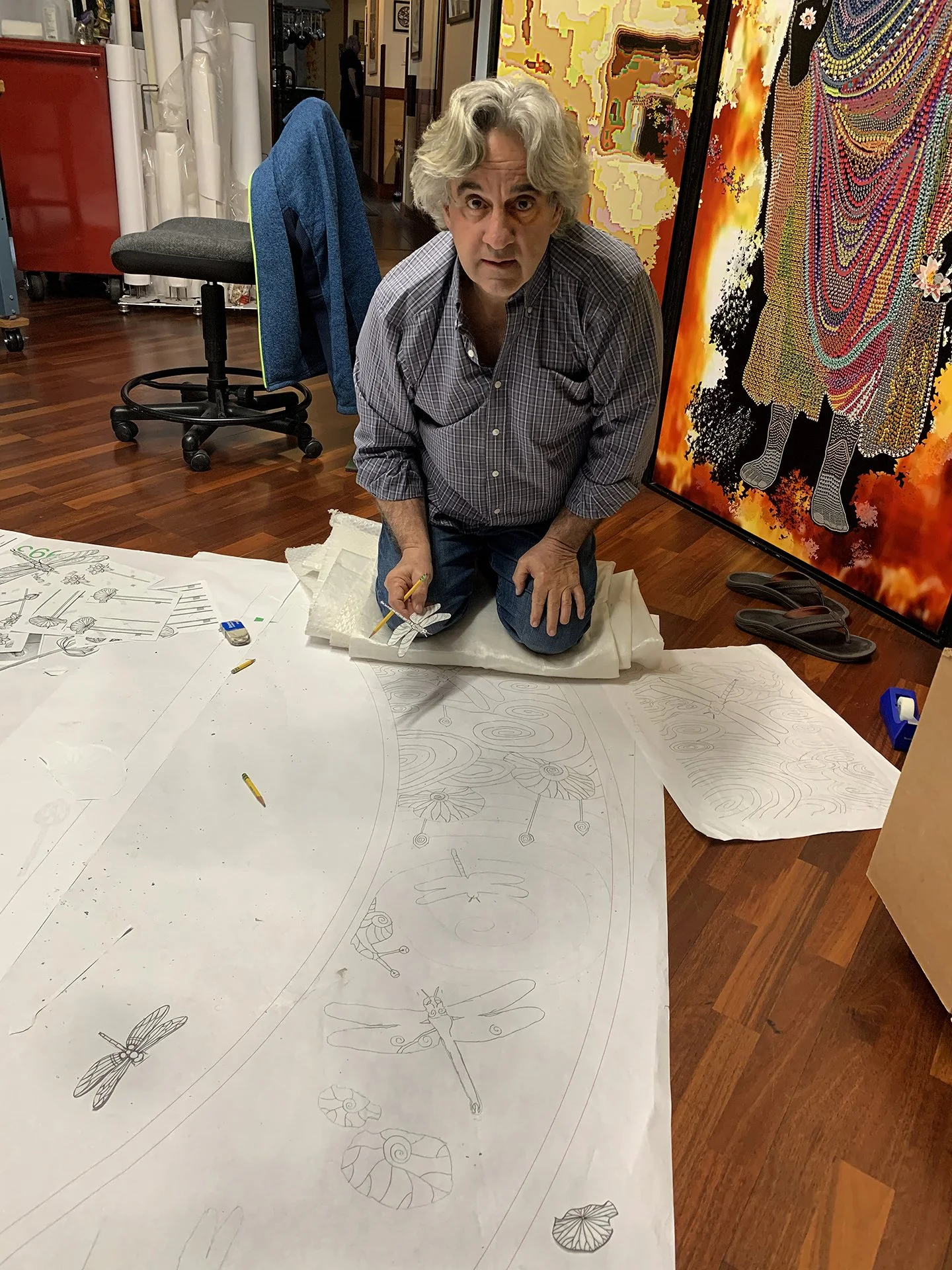
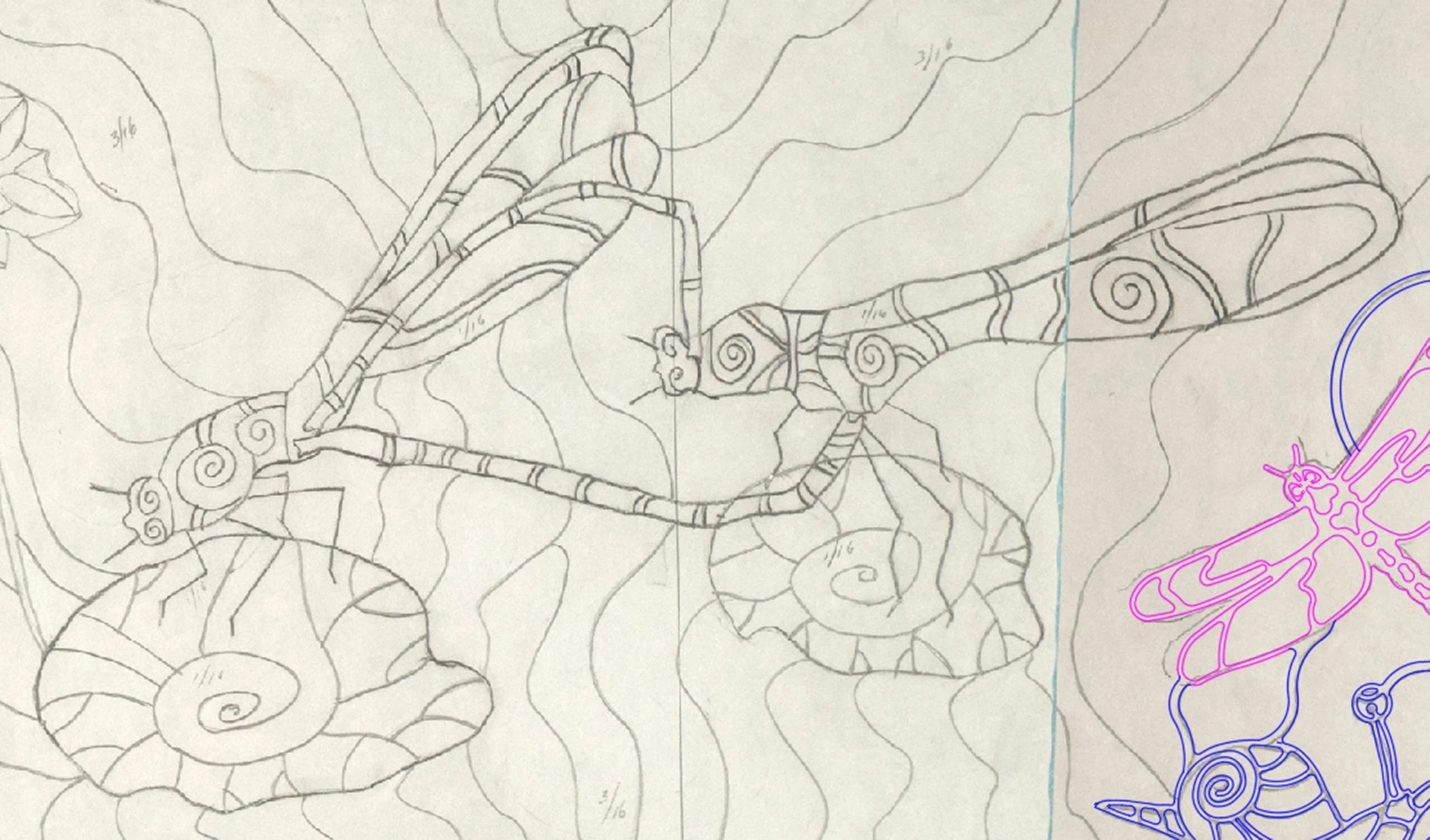
The important move is from observation to line. Once the drawing exists, the line can become structure.
LINE BECOMES STRUCTURE
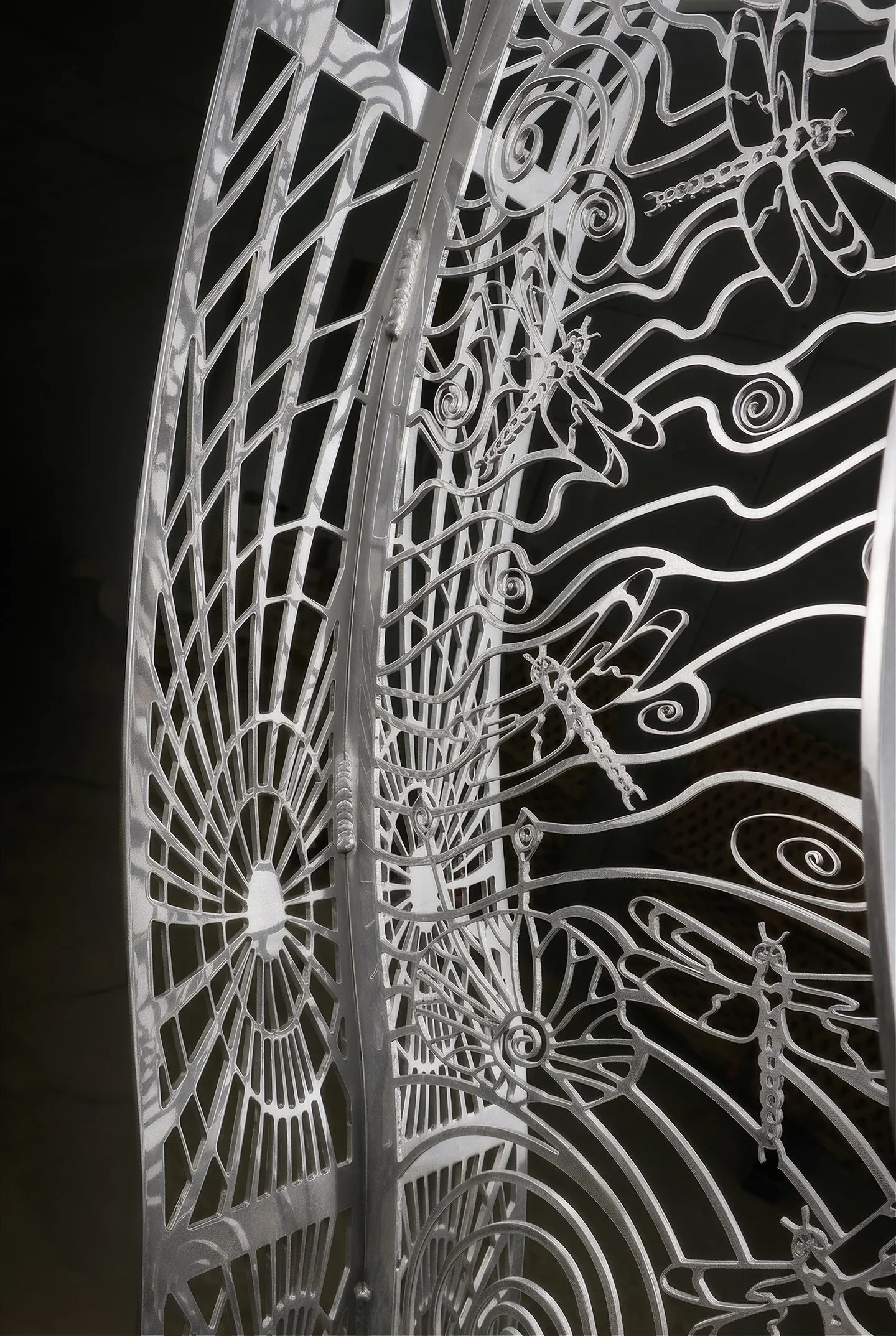
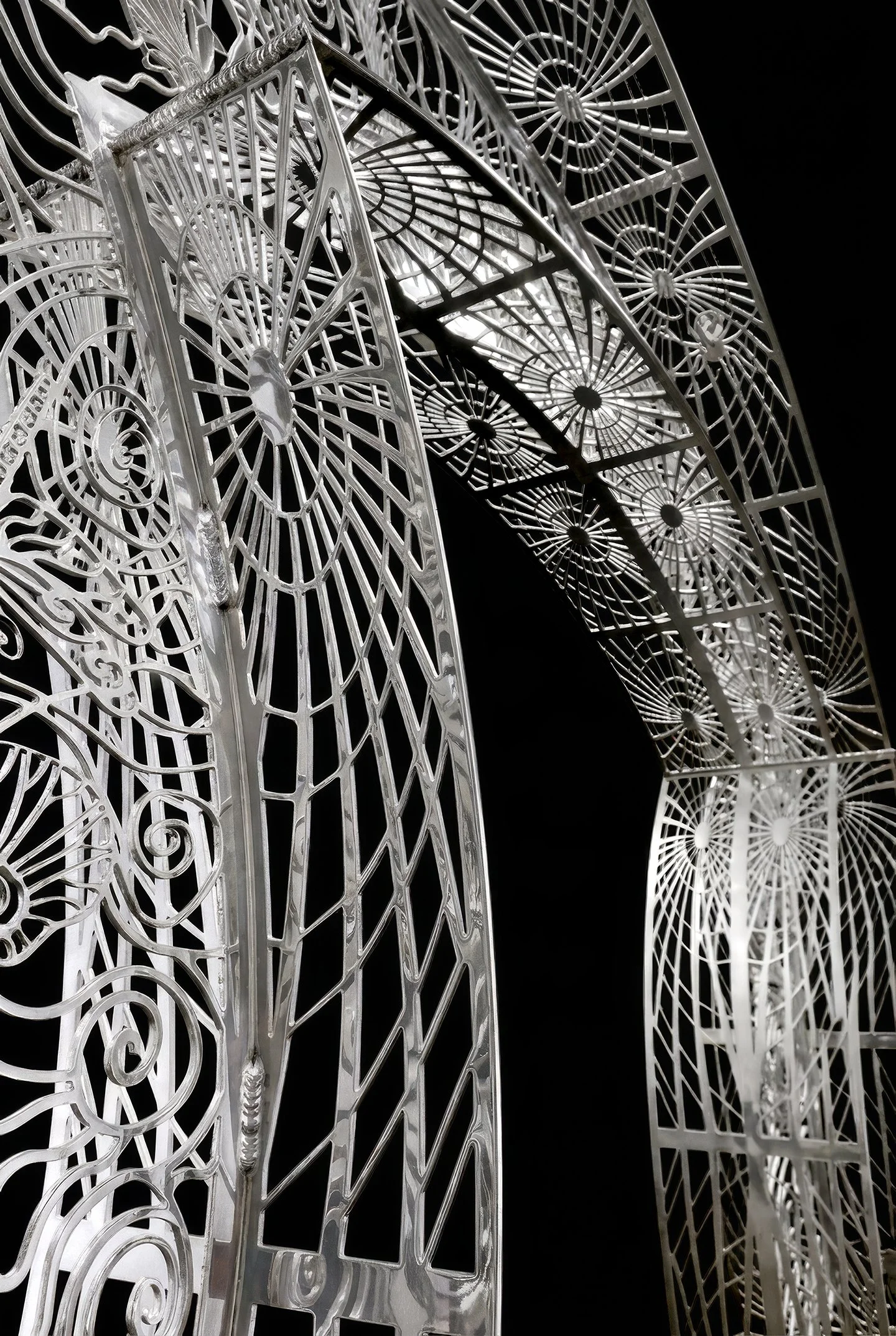
The drawing was translated into a cut-metal skin. Negative space becomes as important as metal: the portal is built from what is there and what has been removed.
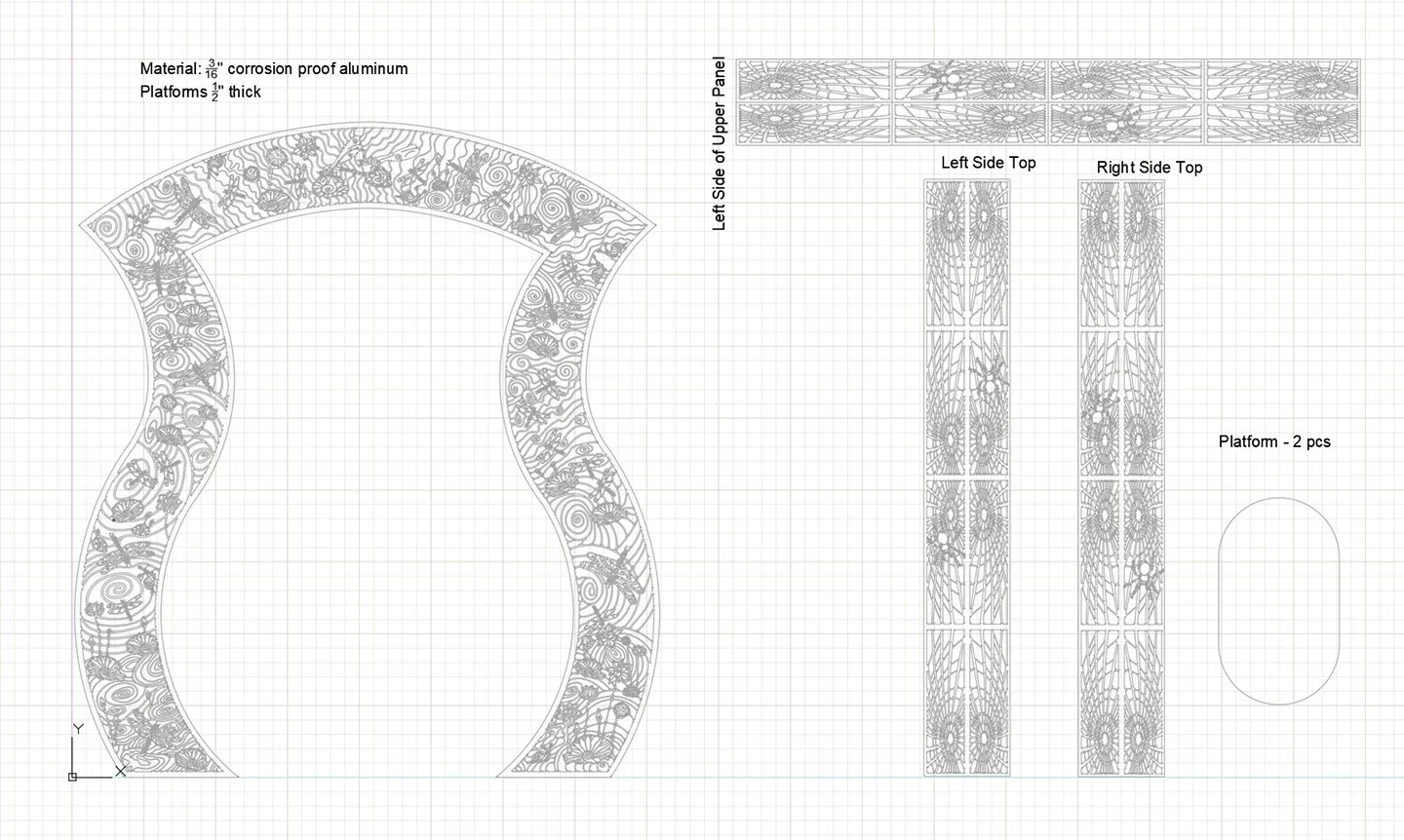
At architectural scale, the image has to do two things at once. It must remain drawing, but it also has to stand, curve, span overhead and carry itself in space.
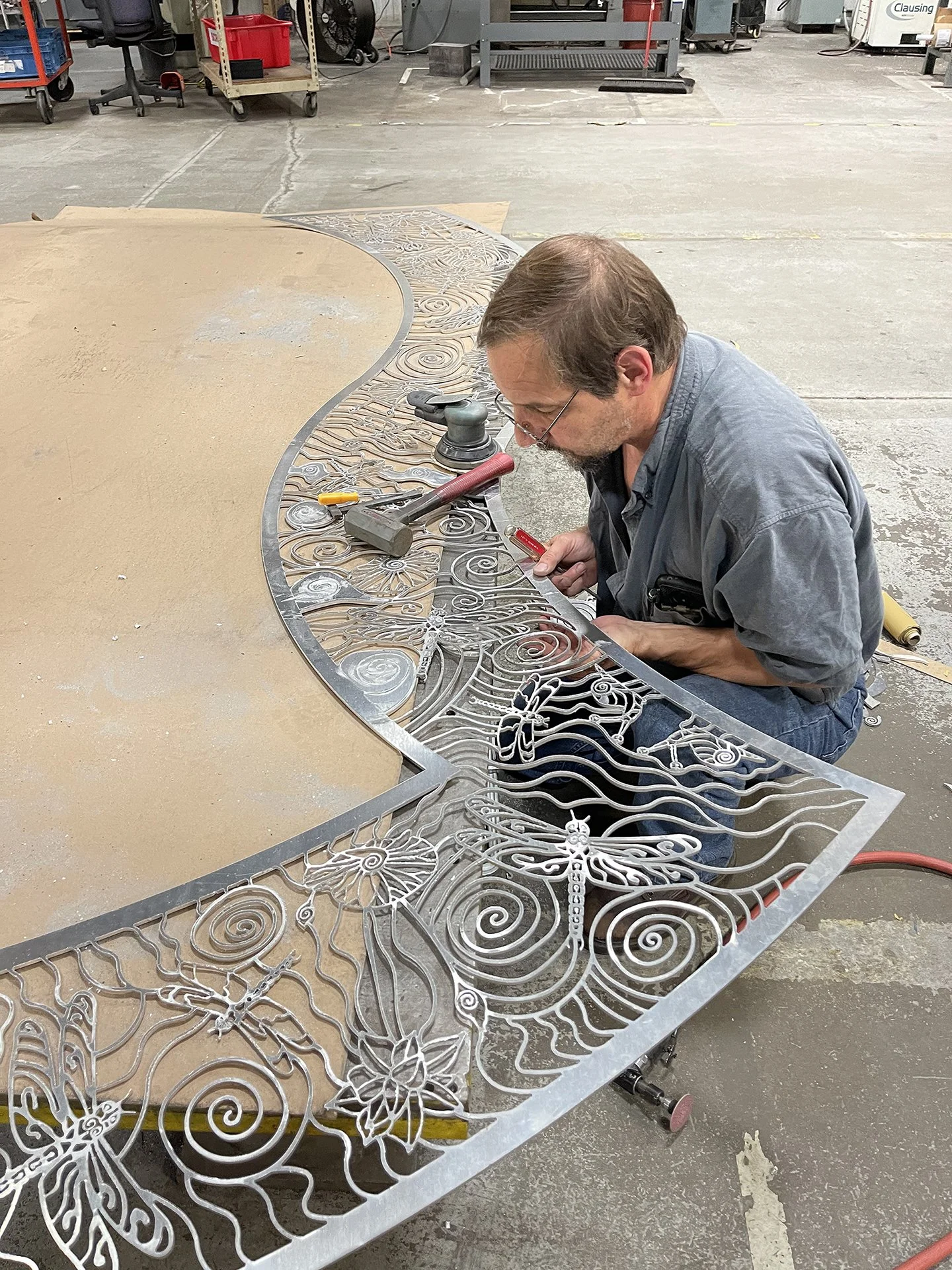
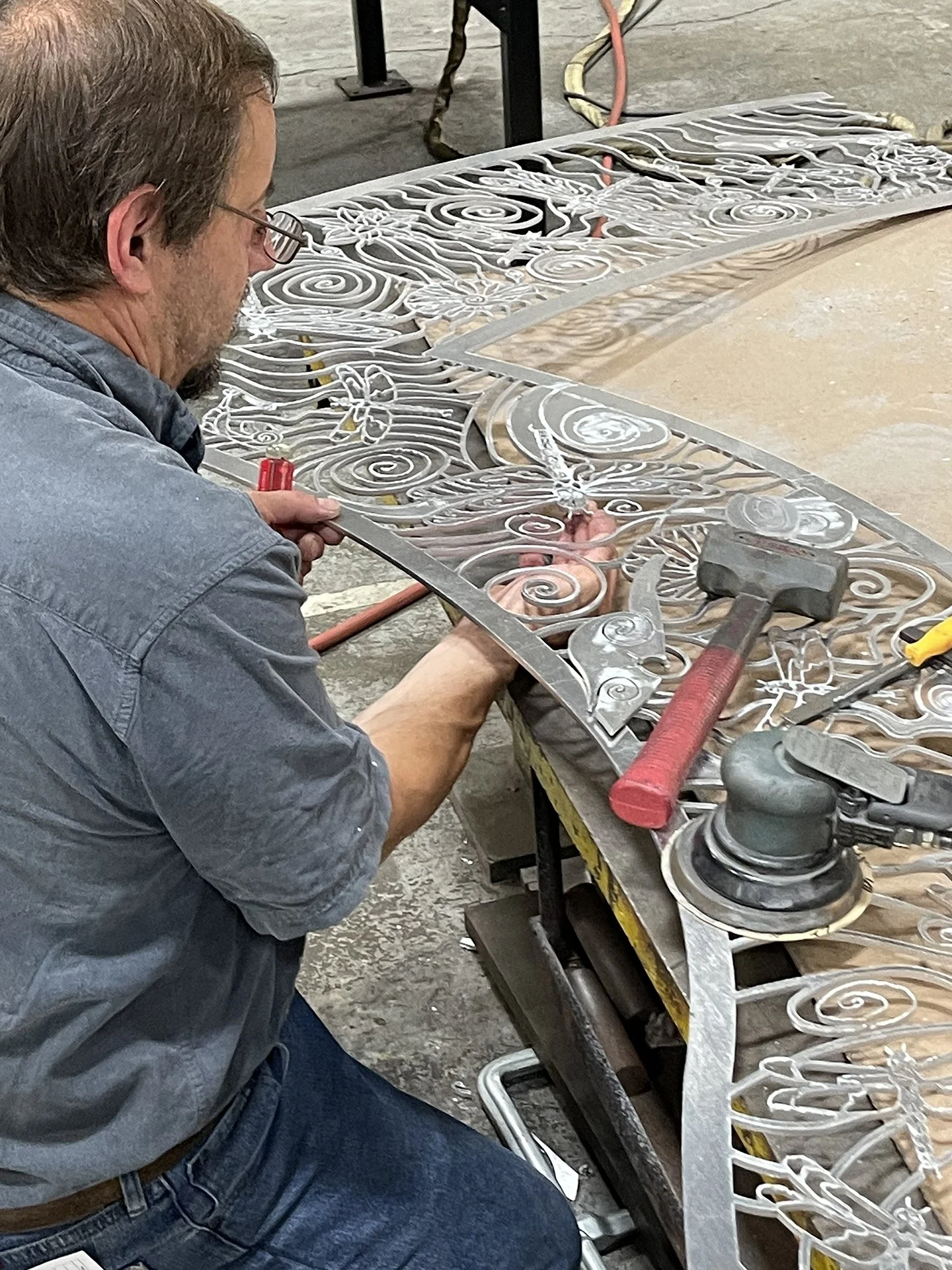
Cutting, fitting, welding and bending turn the flat drawing into a three-dimensional passage. The fabrication is not separate from the image; it is the moment when the image acquires thickness, weight and resistance.
MAKING THE DRAWING PHYSICAL
THE PORTAL EMERGES
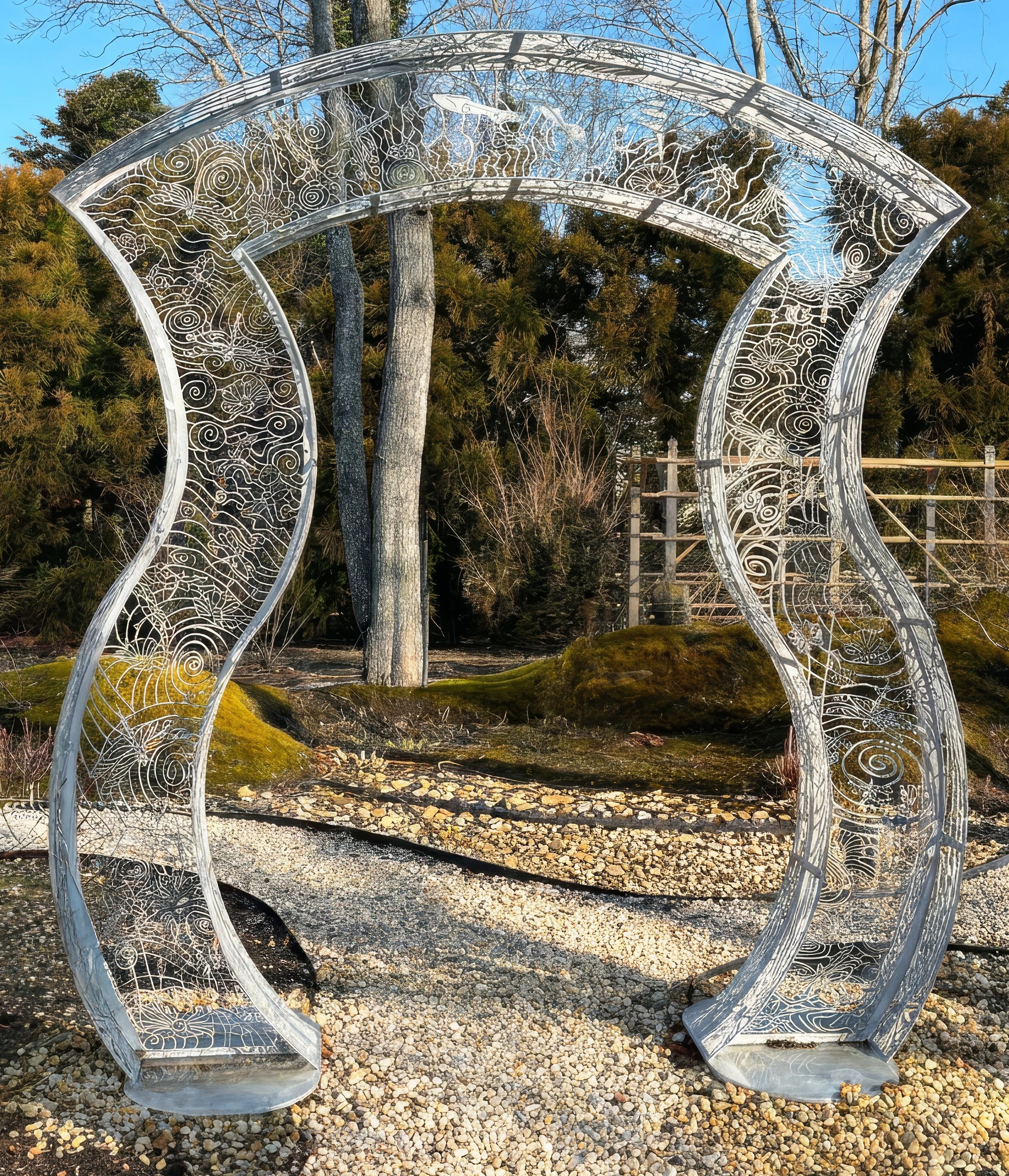
Dragonfly Portal, installed.
The work changes with distance. The whole shape gives way to details: dragonflies, radiating forms, currents and small incidents hidden inside the larger field. The viewer does not simply look at the drawing. The viewer passes through it.
CLOSE ENOUGH TO ENTER THE DRAWING
Here the drawing has become architecture. From a distance the portal reads as a single sweeping form. As you move closer, it breaks apart into hundreds of individual lines, creatures, spirals and openings.
PASSAGE
That is the transformation at the center of the piece: drawing becomes structure; structure becomes passage.
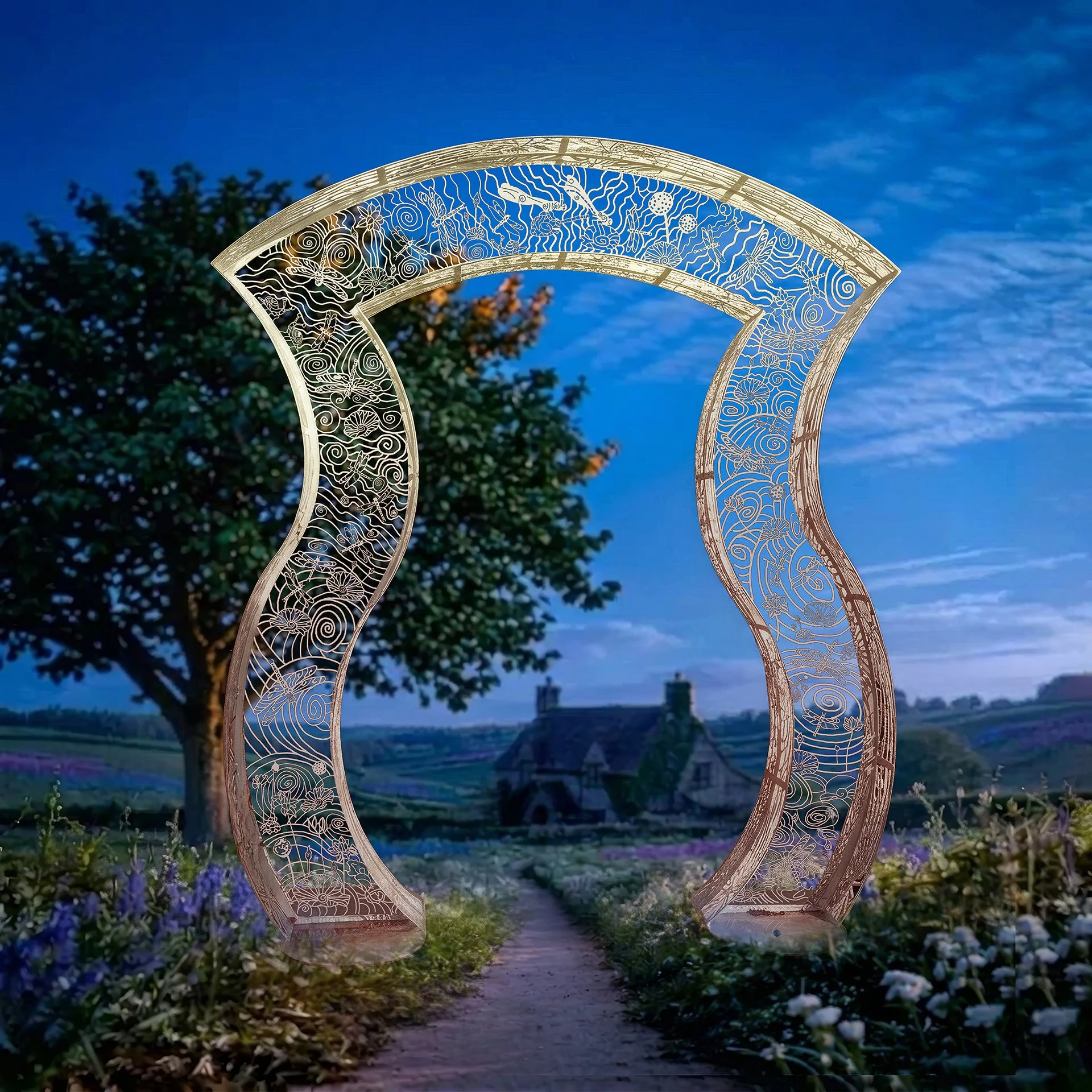
Visualization of the portal in a landscape.