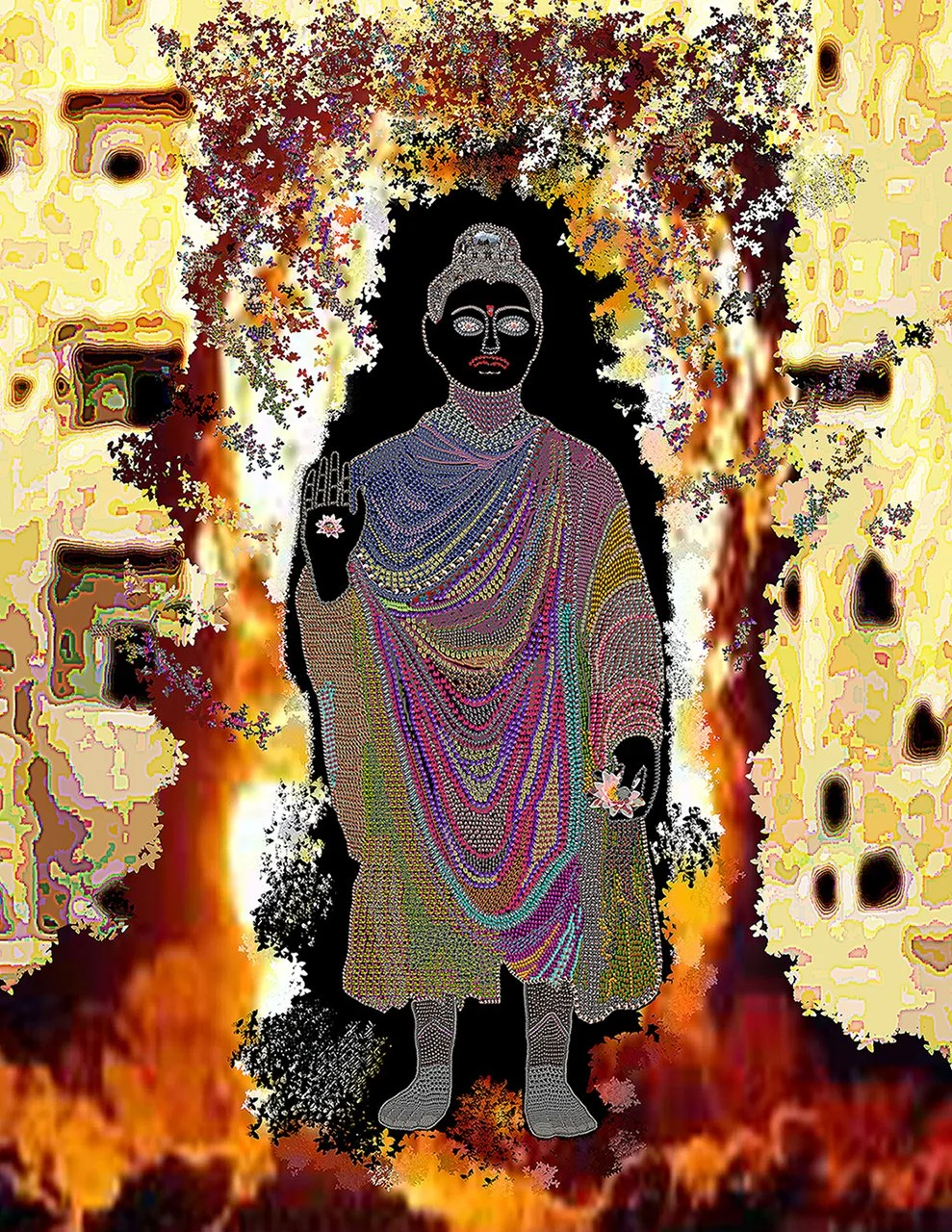
A MIND OF ENLIGHTENMENT
Reconstructing the Bamiyan Buddha
CAMPFIRE STORY
BEFORE THE ARTWORK

Afghanistan was already in my imagination
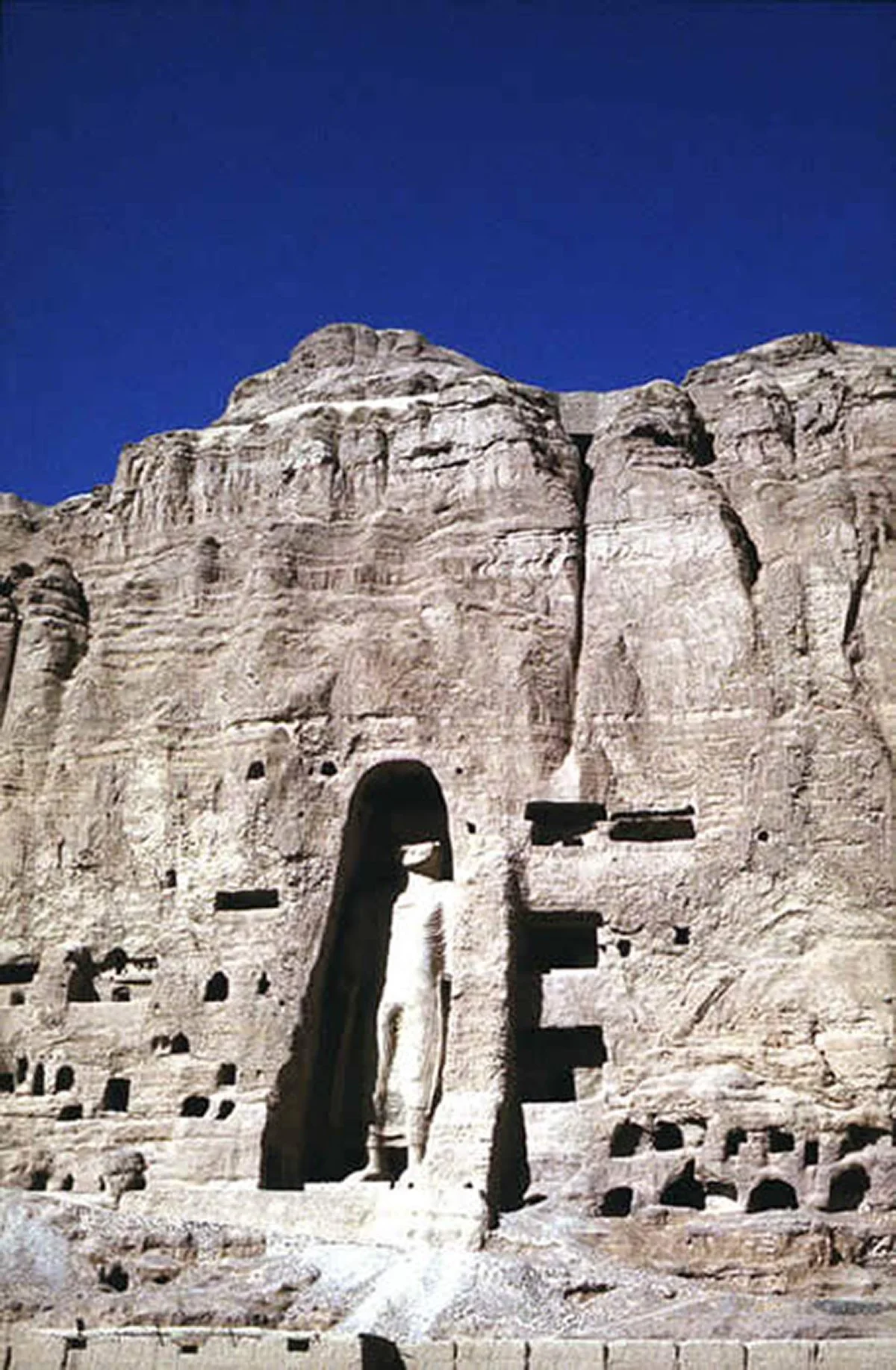
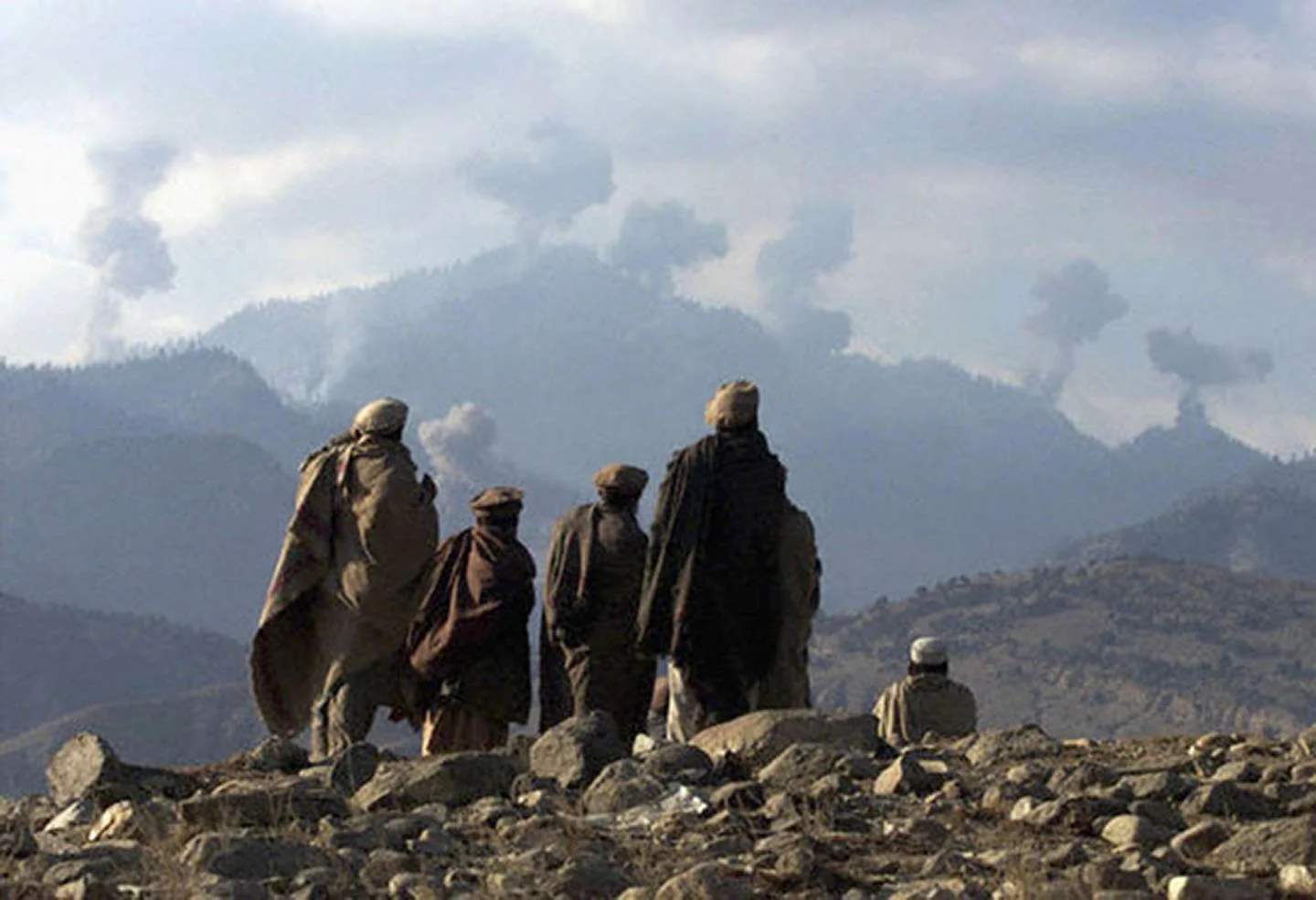
When I was in my early twenties, I read about Afghanistan, the Mujahideen fighting the Soviets, the Hindu Kush and the Slik Road. It seemed remote, difficult and strangely romantic. I even imagined traveling there someday.
Years later, Afghanistan came back into my life in a very different way.
Then the Buddha was gone
BAMIYAN
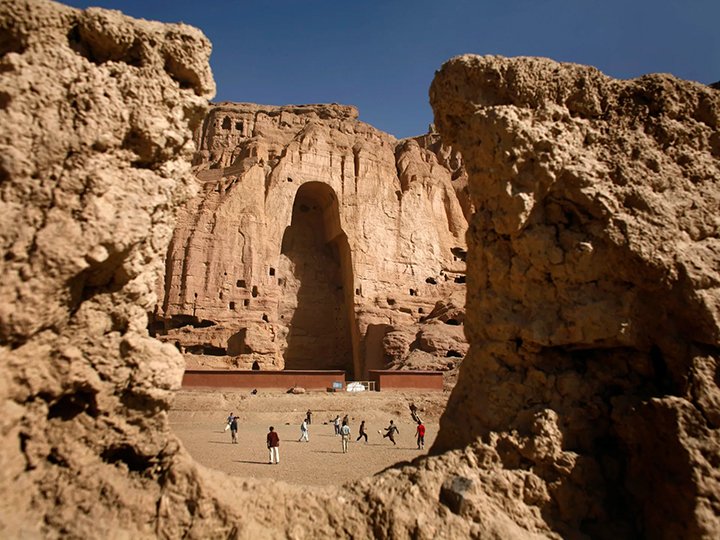
The Taliban saw the ancient Buddhas as idols. After using them for target practice, they finally destroyed
them with explosives. The world watched an irreplaceable part of the Bamiyan Valley disappear.
People talked about rebuilding the Buddha, projecting it back into the niche, somehow recovering what
had been lost. But it had been blown to smithereens.
Use the people who destroyed it
A DIFFERENT KIND OF RECONSTRUCTION
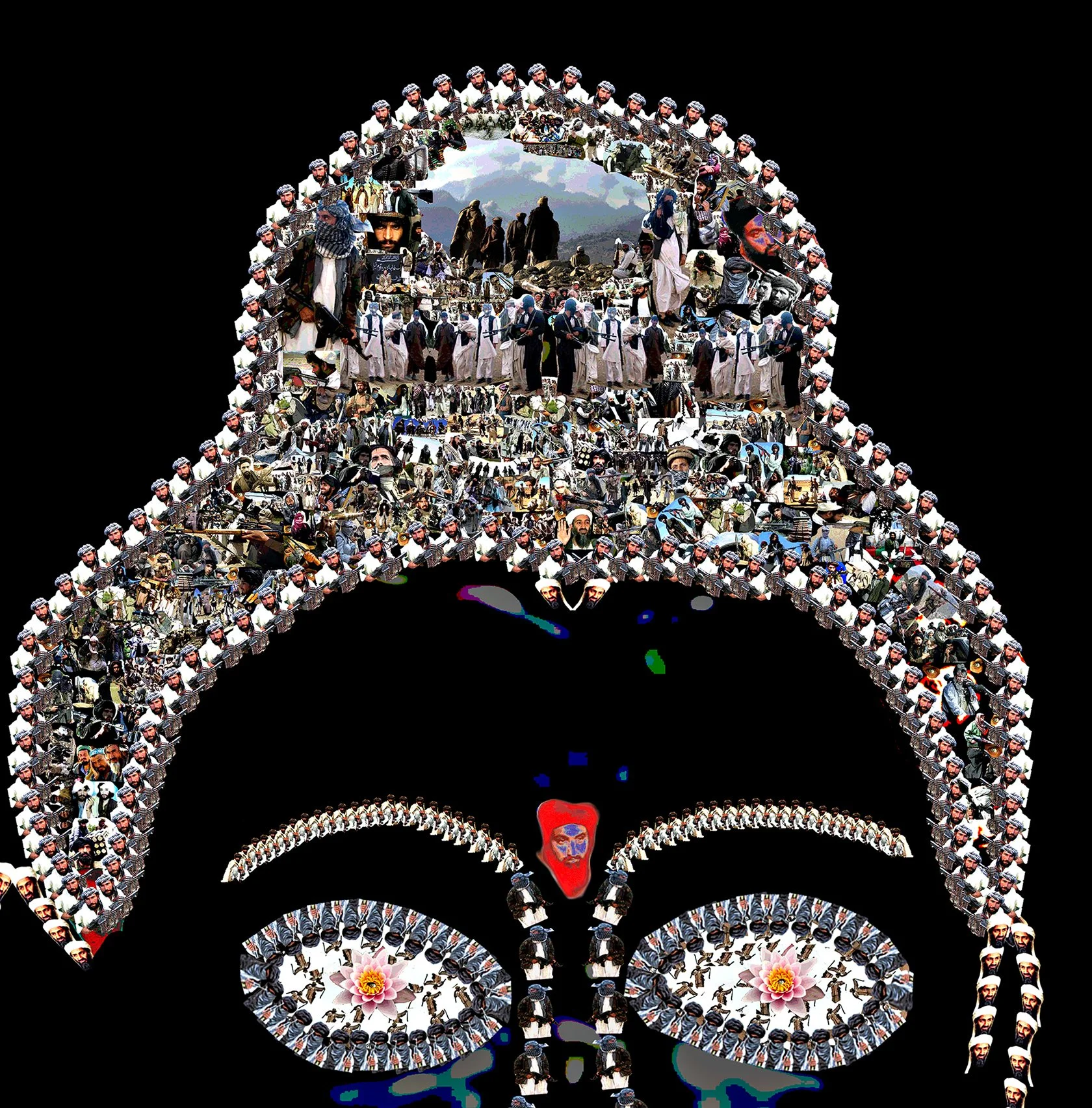
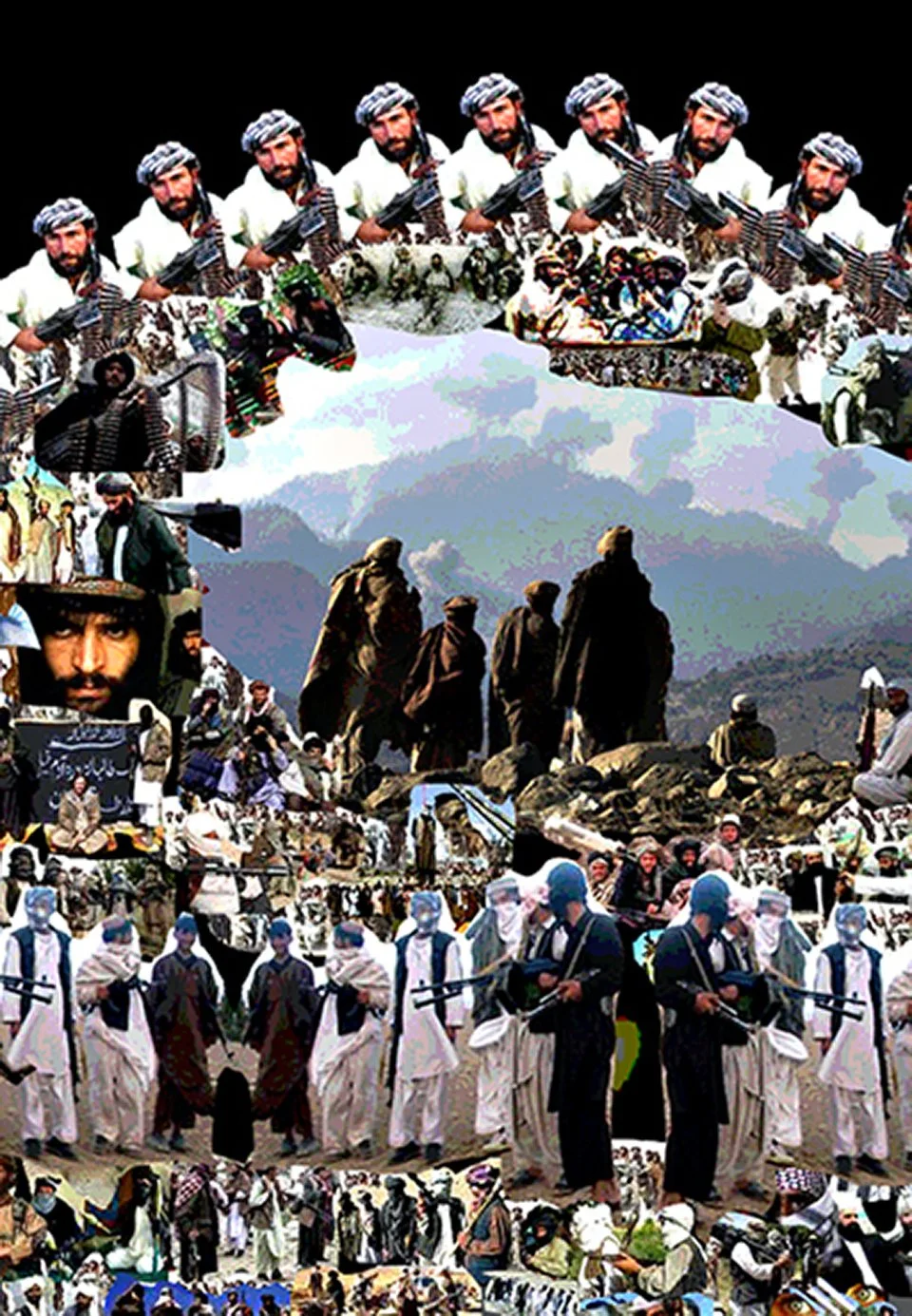
I had been studying Buddhism, and after thinking about the destruction for a while, an idea popped into my head: I was going to reconstruct the Buddha using the guys who destroyed it.
I thought that would be a Buddha-kind of thing to do.
I gathered photographs of fighters, guns, war, explosions and faces and began assembling them on the computer. The intolerance wasn't removed from the picture. It became part of the material from which the Buddha was rebuilt.
FROM A DISTANCE
A jeweled Buddha
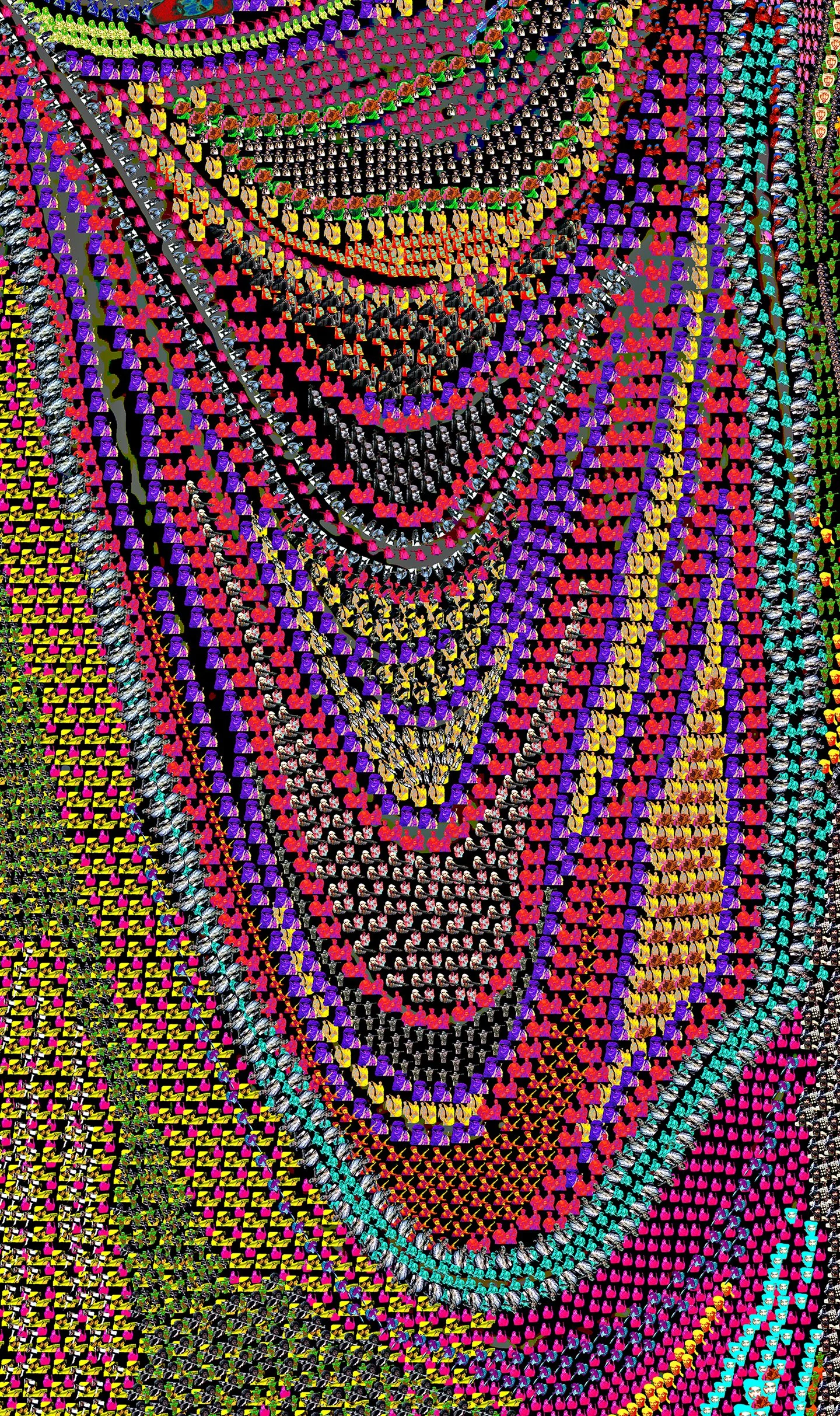
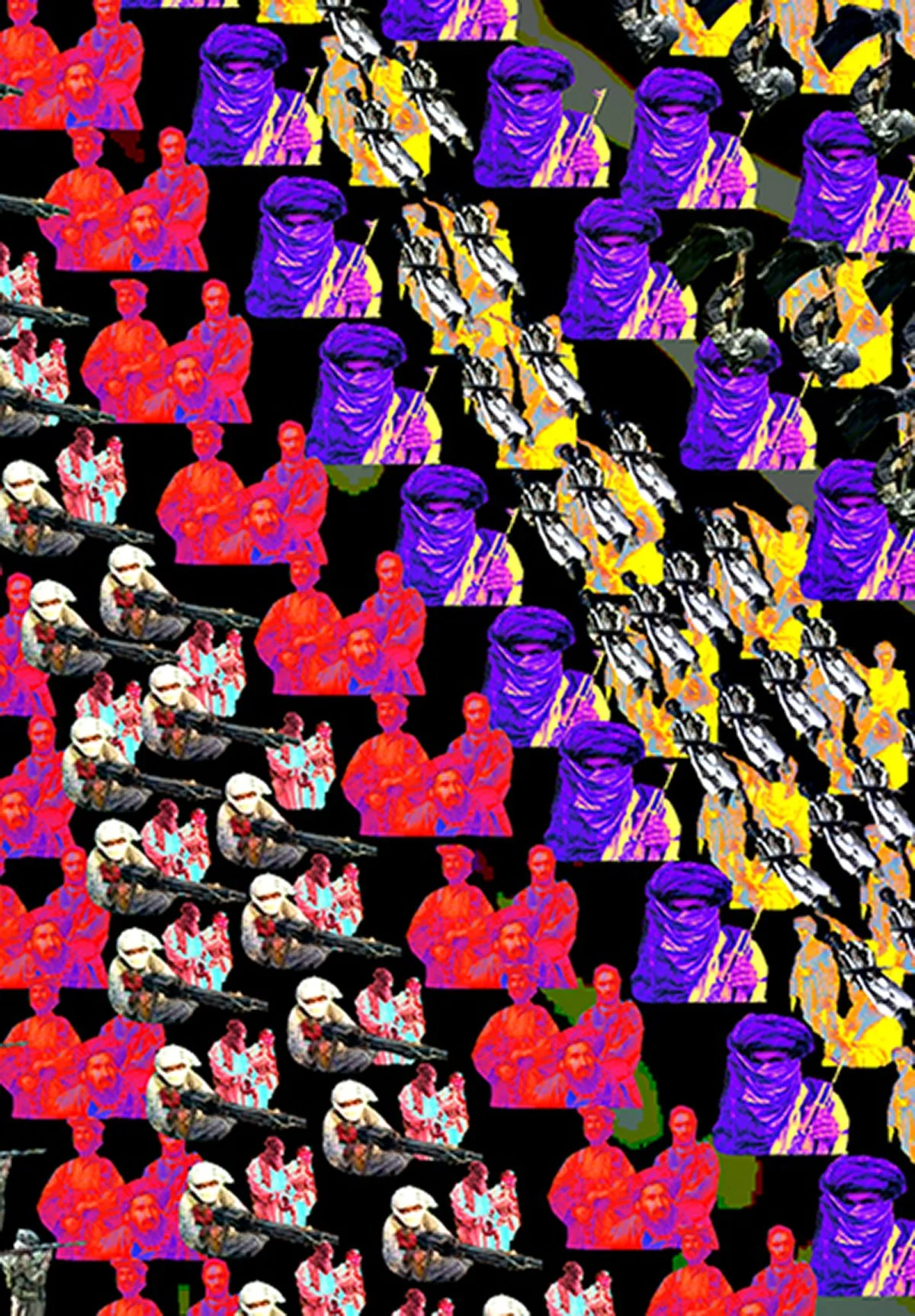
People often approach the work with an index finger already reaching toward it. From across the room the surface can look painted, jeweled, almost three-dimensional.
GO CLOSER. GO REALLY CLOSE.
Then the jewels break apart into photographs. Faces. Fighters. Guns. Osama bin Laden. Taliban figures. The image changes as soon as you discover what you are actually looking at.
ANOTHER DISCOVERY
The eye in the hand
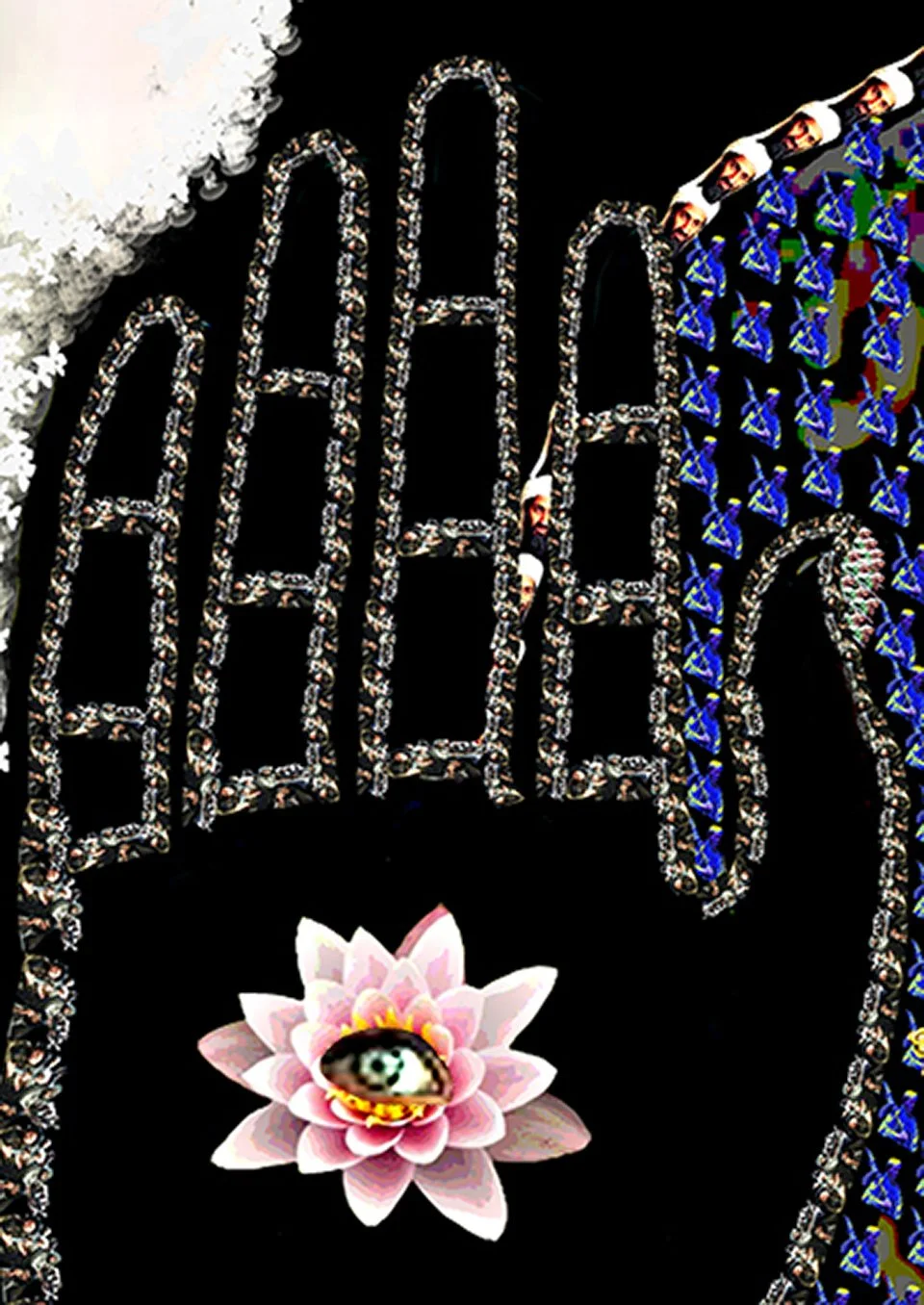
I was thinking about the women of Afghanistan.
In the Buddha's raised hand I placed an eye from Steve McCurry's photograph Afghan Girl.
I couldn't imagine Afghanistan moving forward while half its people were denied the opportunity to participate fully in its life.
The eye became my way of putting those women directly into the Buddha.
The explosion became butterflies
THE EXPLOSION CHANGES
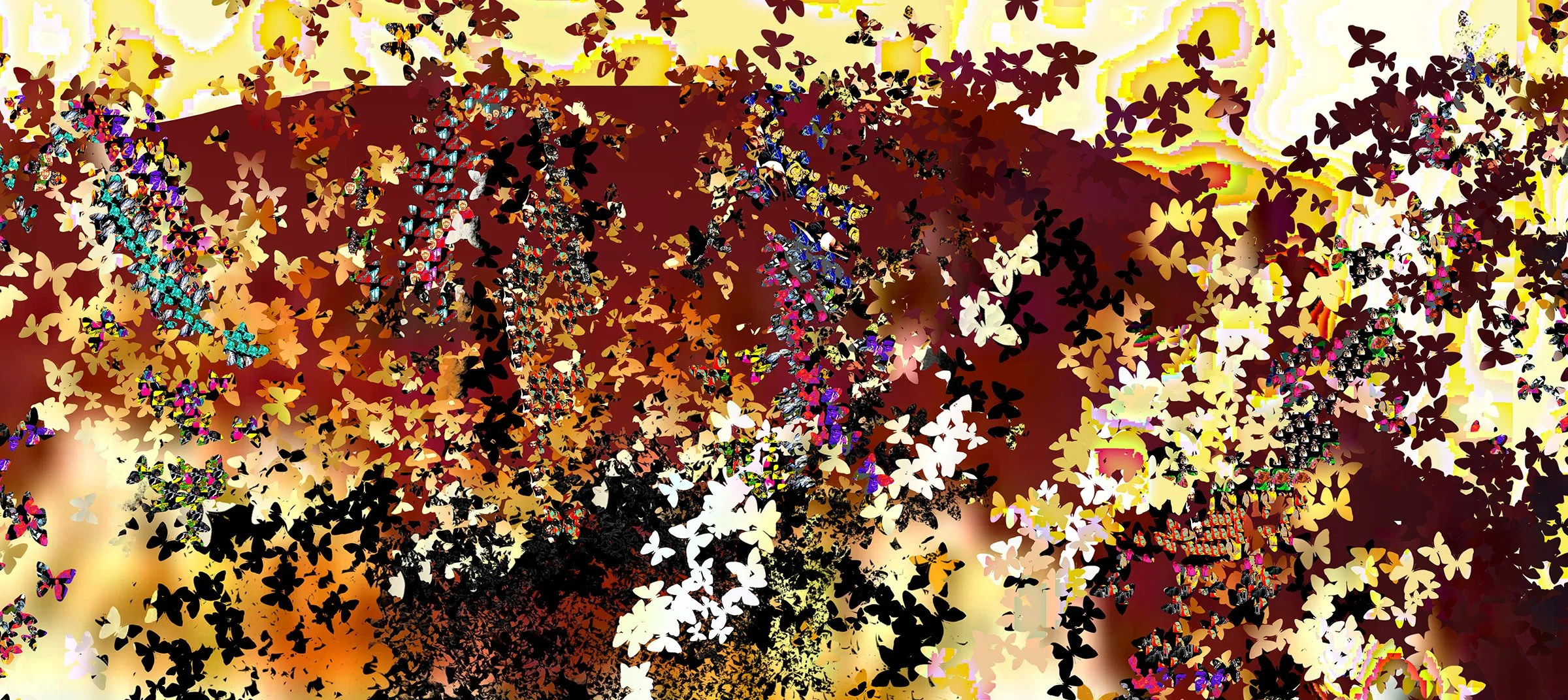
I had come across the butterfly as an image of transformation, and it seemed exactly right. Around the reconstructed Buddha, the explosion changes into butterflies.
The intolerance, ignorance and stupidity that destroyed the Buddha could become something else.
The people who destroyed the Buddha became the Buddha. The explosion became butterflies.
Printed canvas, folding panels - and light from inside
FROM SCREEN TO OBJECT
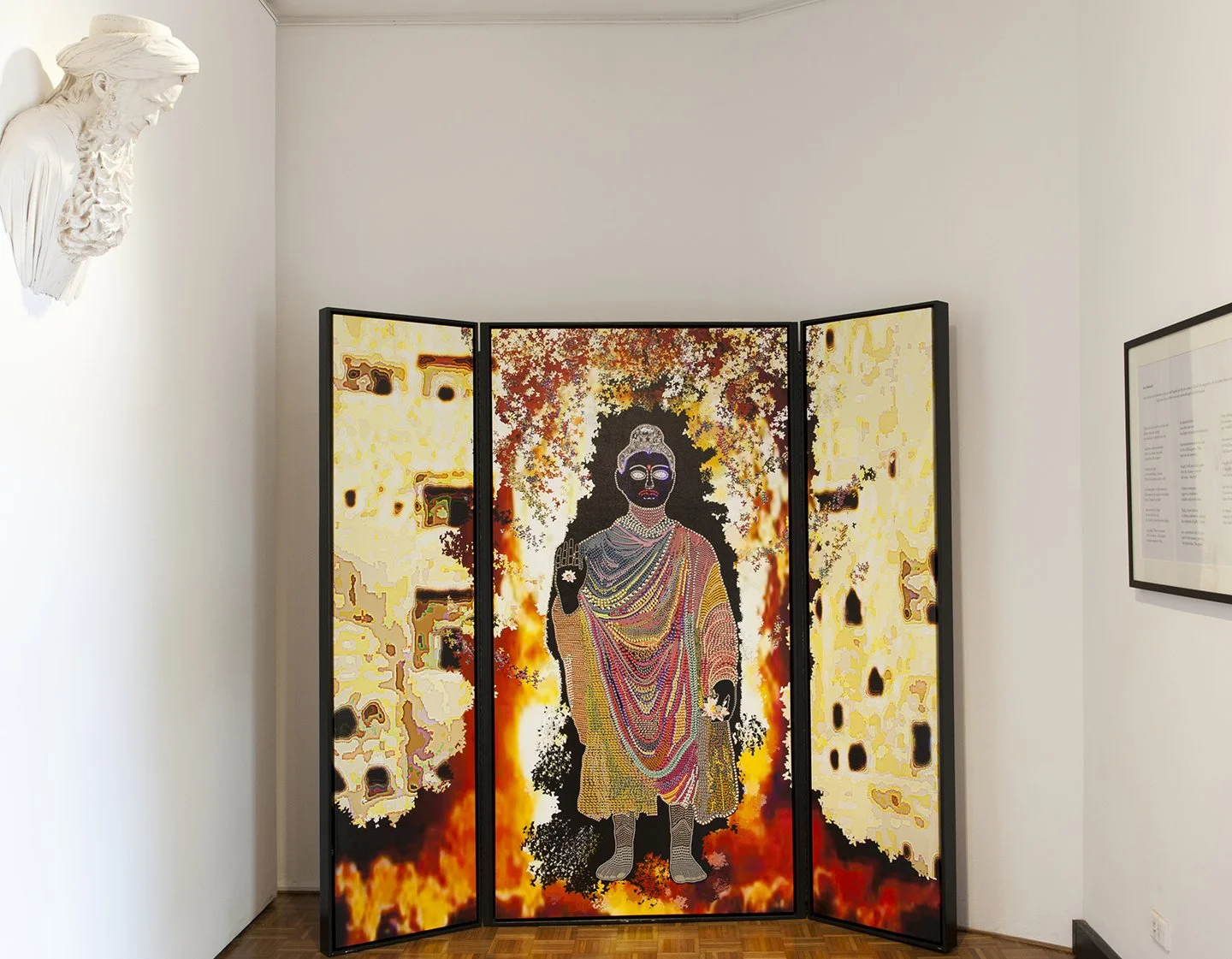
The first version was about ten feet tall and built in three sections. The digital collage was printed on Epson canvas, stretched and assembled as a large physical work.
For the Blake Prize I made a smaller, roughly six-foot version with folding side panels so it could travel and be shown more easily.
Behind the canvas I placed changing LED 'Buddha lights' I had brought home from shrine-supply shops in Rangoon, Burma. Their light came through the canvas around the Buddha's eyes and head.
ANOTHER KIND OF SCULPTURAL IMAGE
Here the image remains fundamentally an image, but it has been built into a physical object. Printed canvas, folding panels, scale and light give it a presence in the room without turning it into conventional sculpture.
The image remains an image, but it occupies space with you.
THE BLAKE PRIZE
Australia,2013
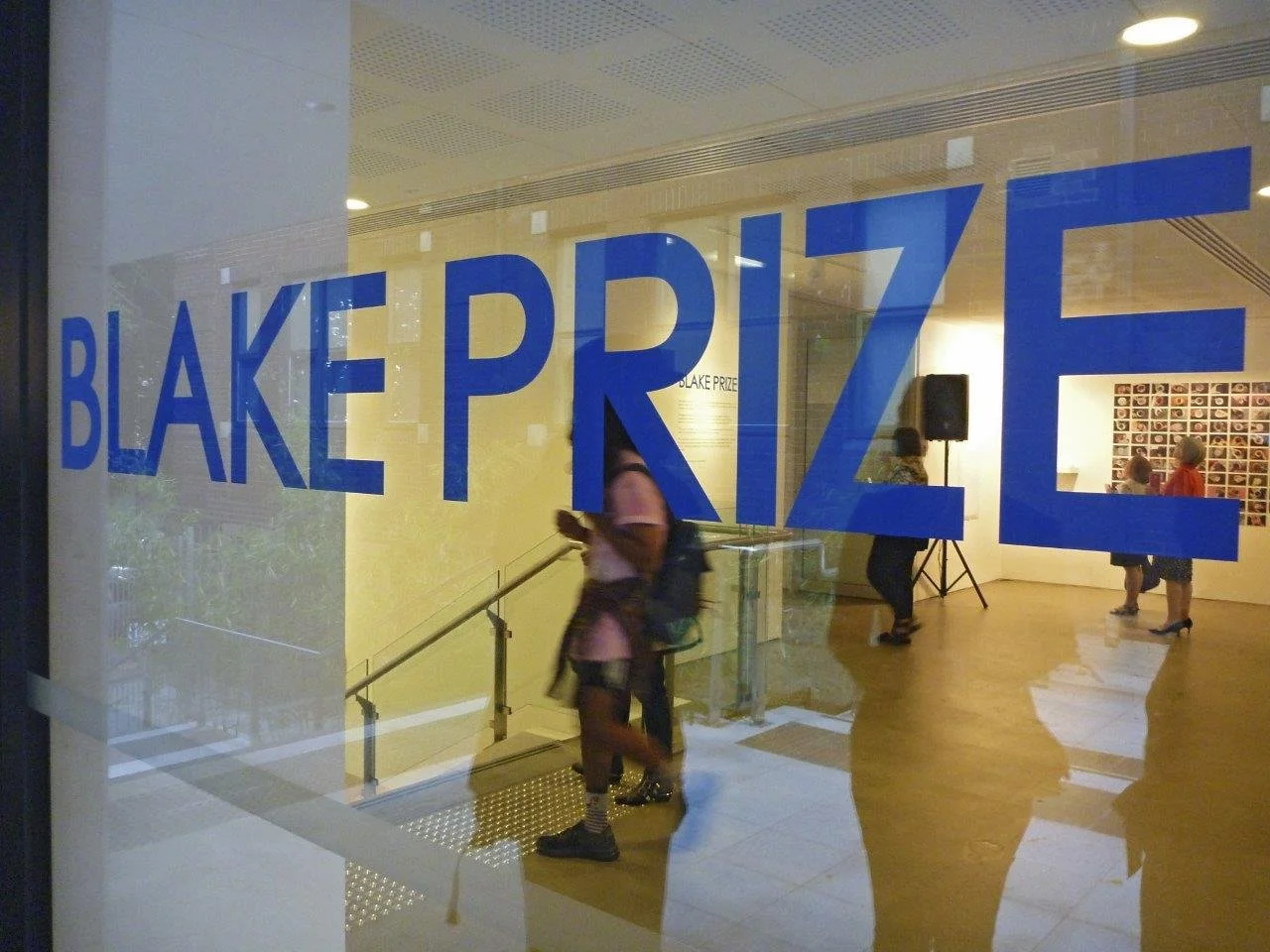
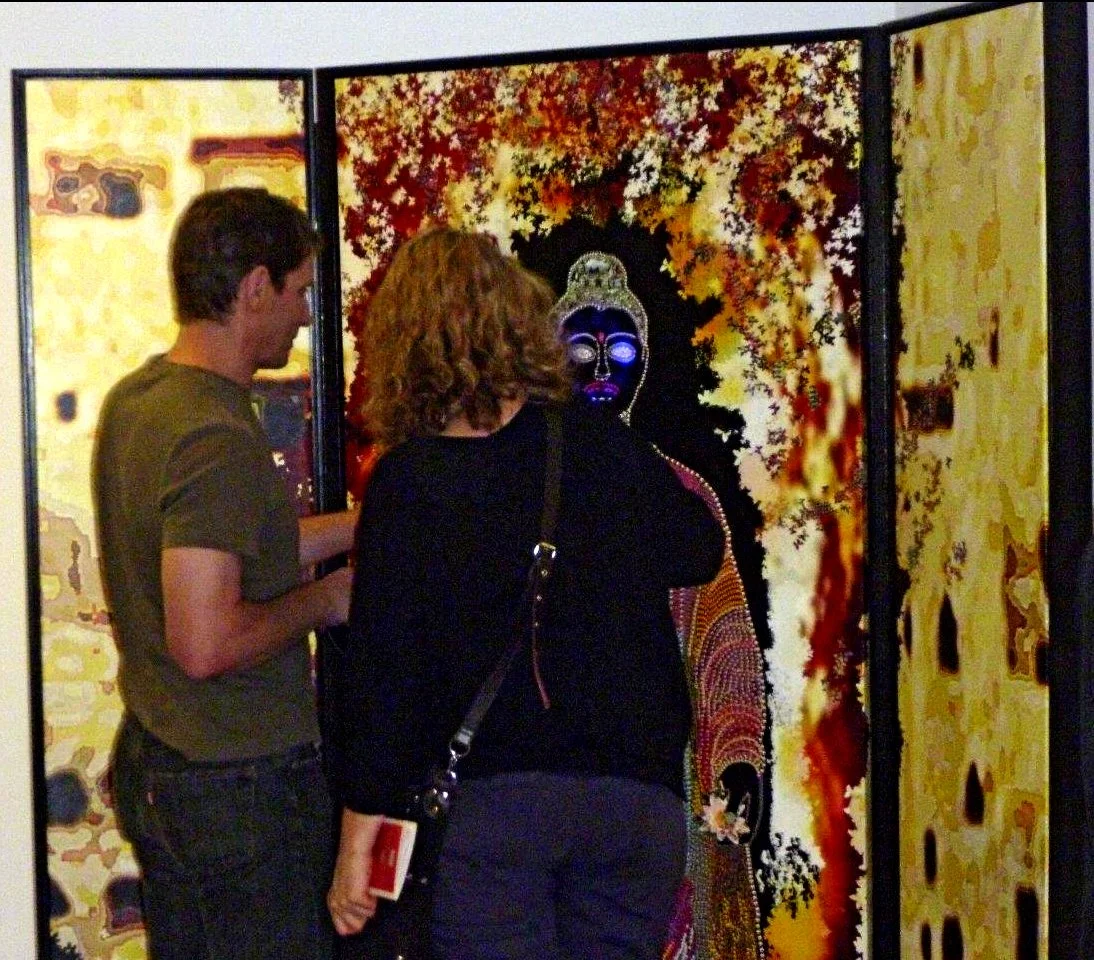
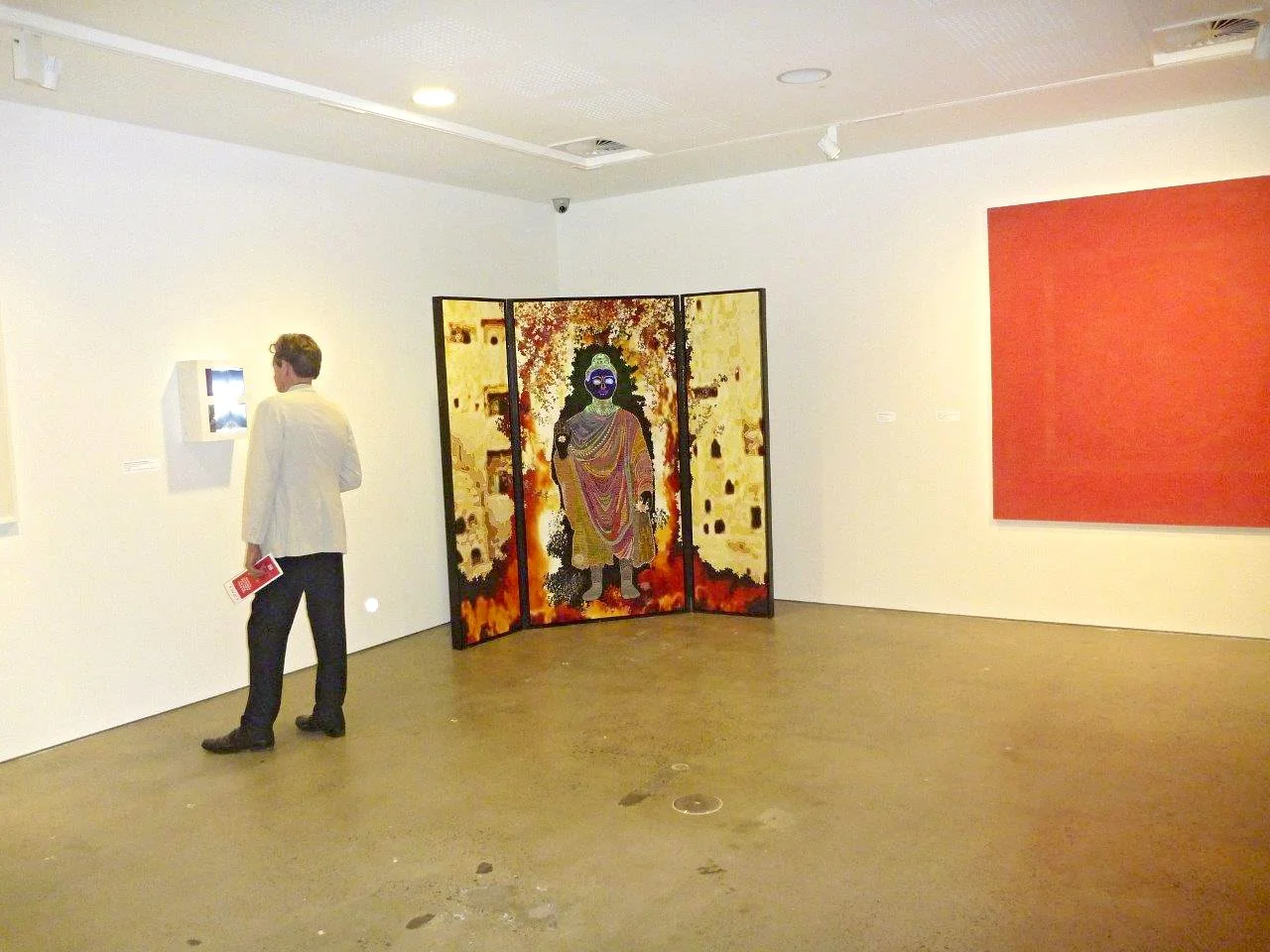
A Mind of Enlightenment became my first Blake Prize finalist. The Blake Prize felt made for the way I was thinking: a place where artists could question spirituality rather than illustrate a prescribed belief.
In the gallery, viewers did exactly what the work asks them to do: they came close.
THE BLAKE PRIZE
See it in the gallery
The work leaves the studio and enters the Blake Prize gallery.
Here, the changing light, physical scale and the viewers coming close become part of the experience.

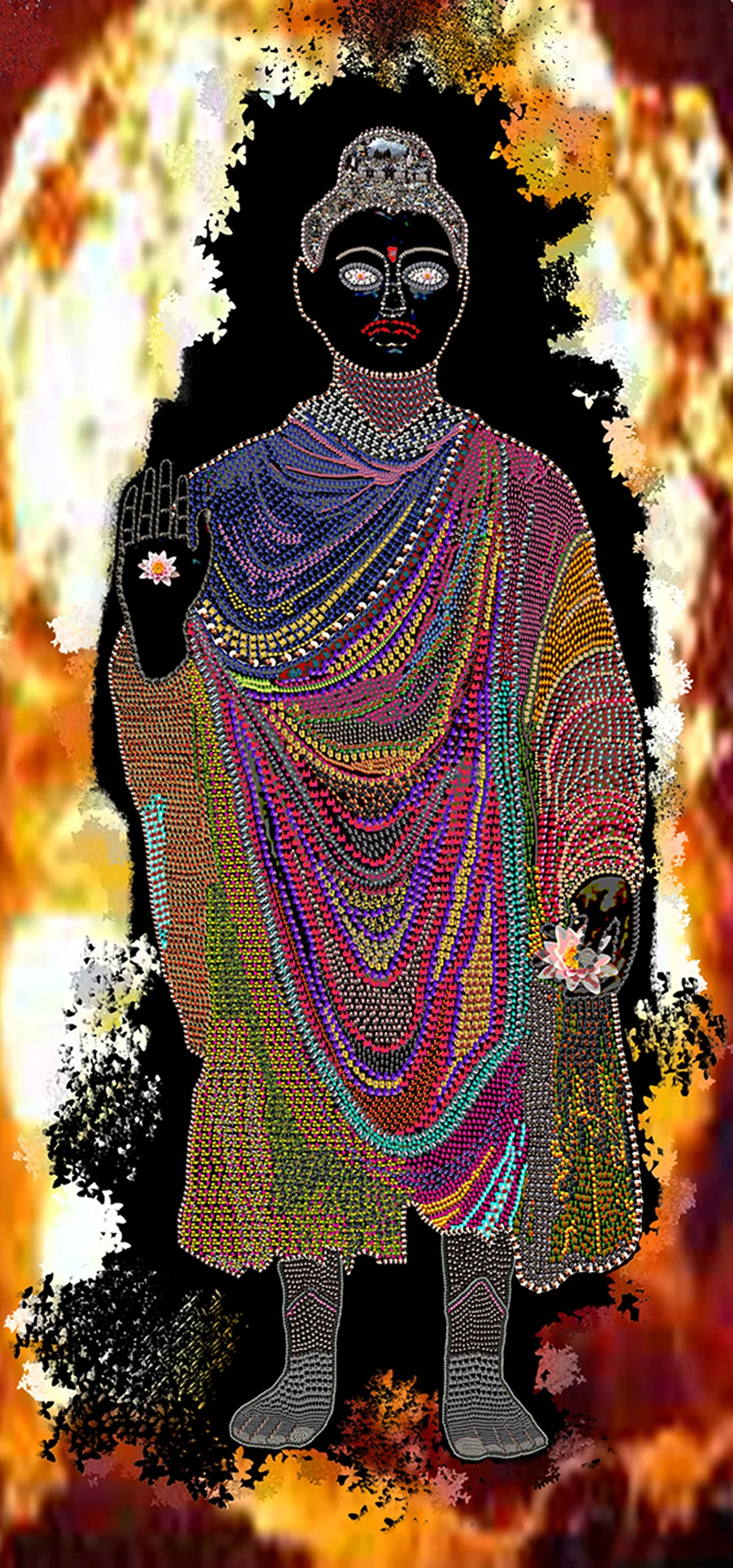
A MIND OF ENLIGHTENMENT
The people who destroyed the Buddha became the material
from which the Buddha was rebuilt.