
EXCESSIVE FORCE
What happens when authority dresses itself for war?
I kept seeing the same thing
1. THE BEGINNING
Not one incident. A pattern that kept returning.
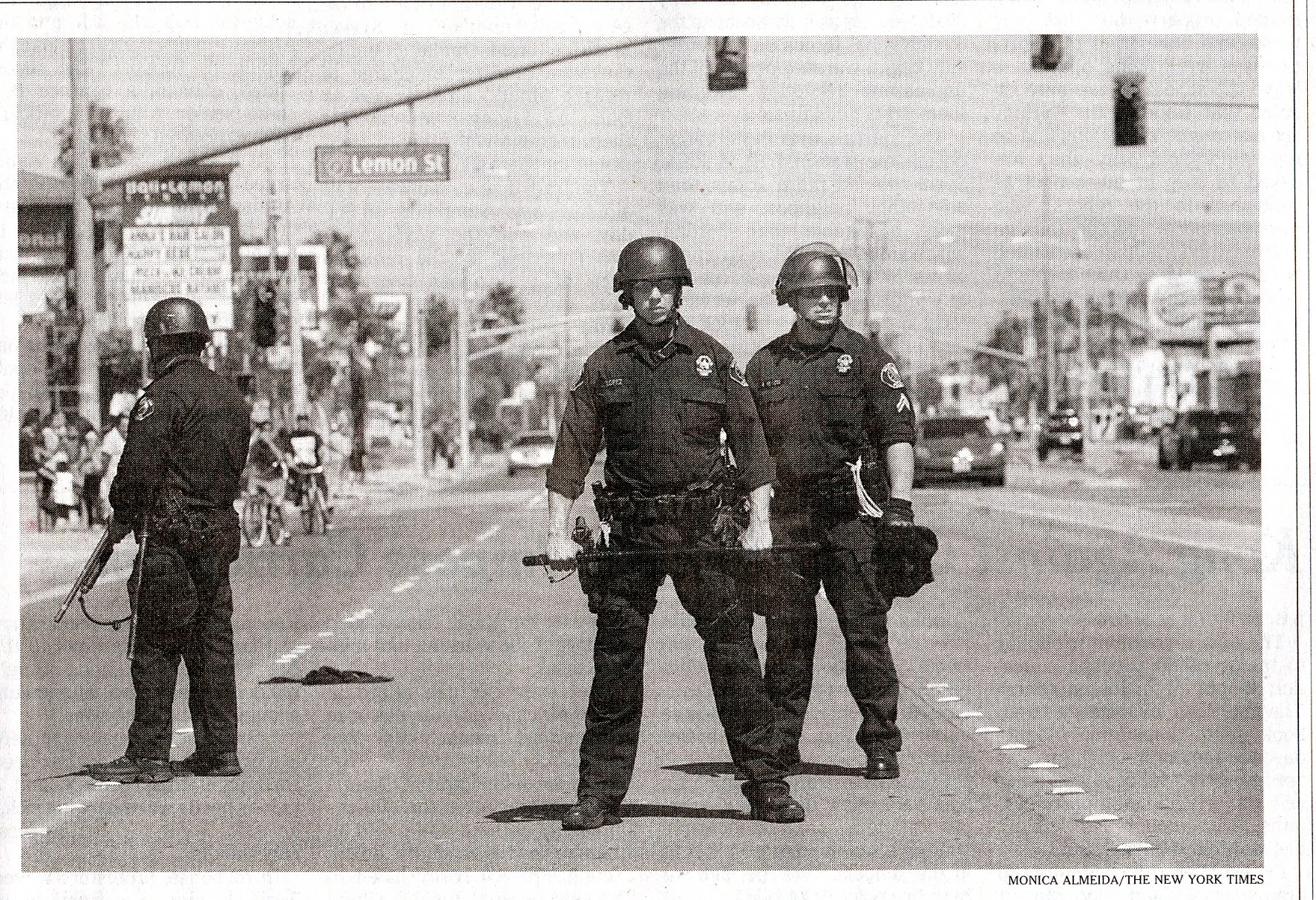
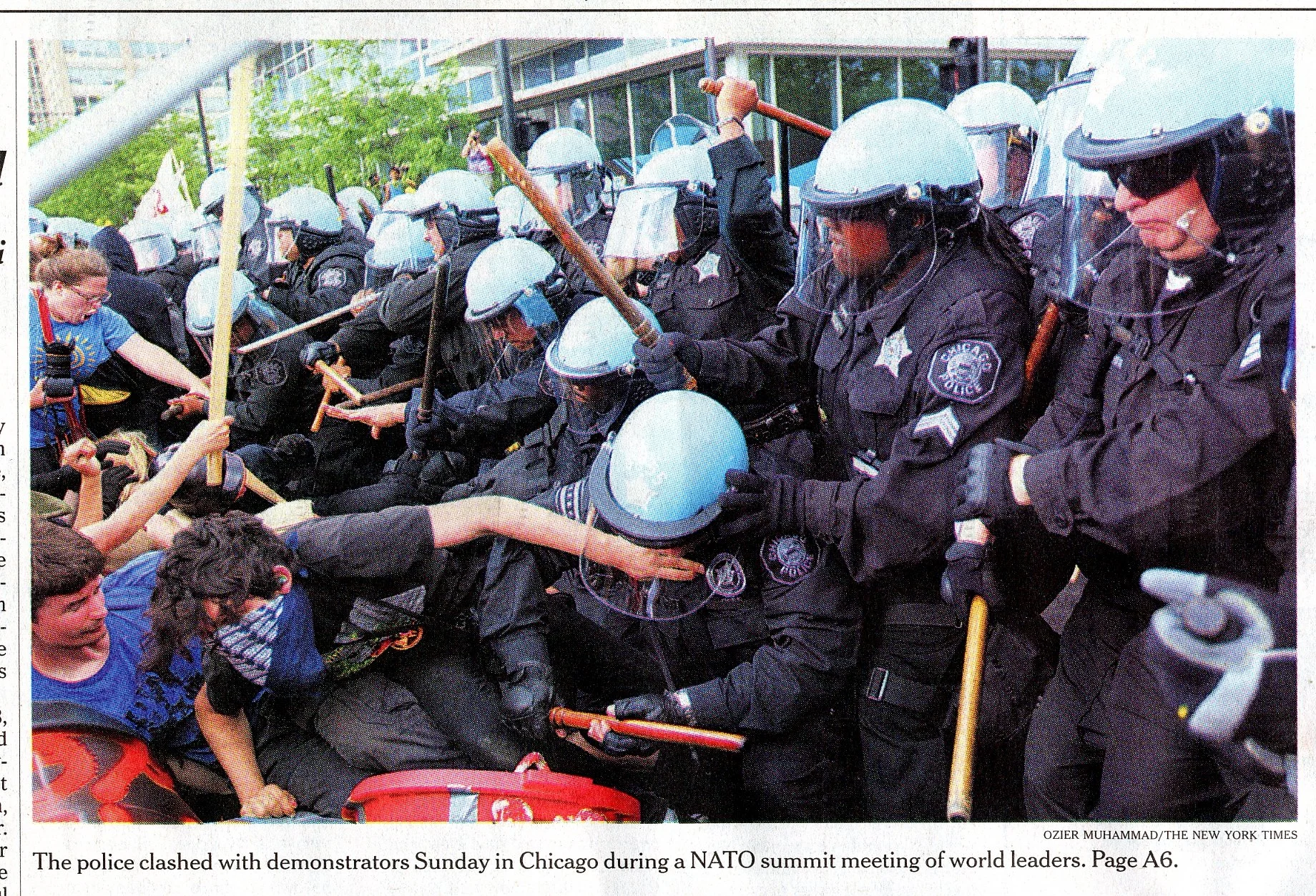
I had been watching images of police confronting protest for most of my life. Over the years the equipment seemed to become heavier, more tactical and more military. The photographs kept accumulating: helmets, shields, batons, guns, armored bodies - and unarmored people on the other side.
What disturbed me was not only the violence in a particular photograph. I began thinking about what this equipment does to the identity of the person who puts it on.
The uniform becomes an identity
2. THE ARMOR
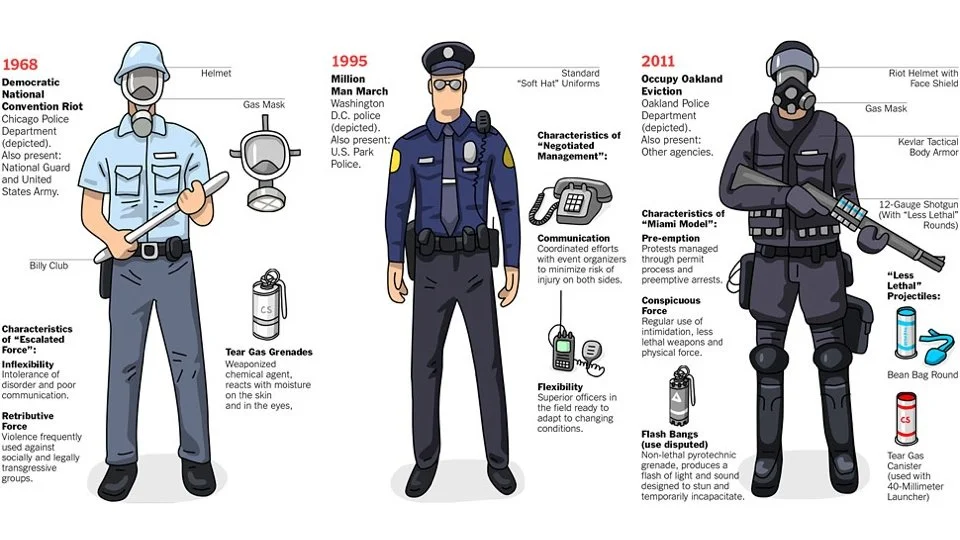
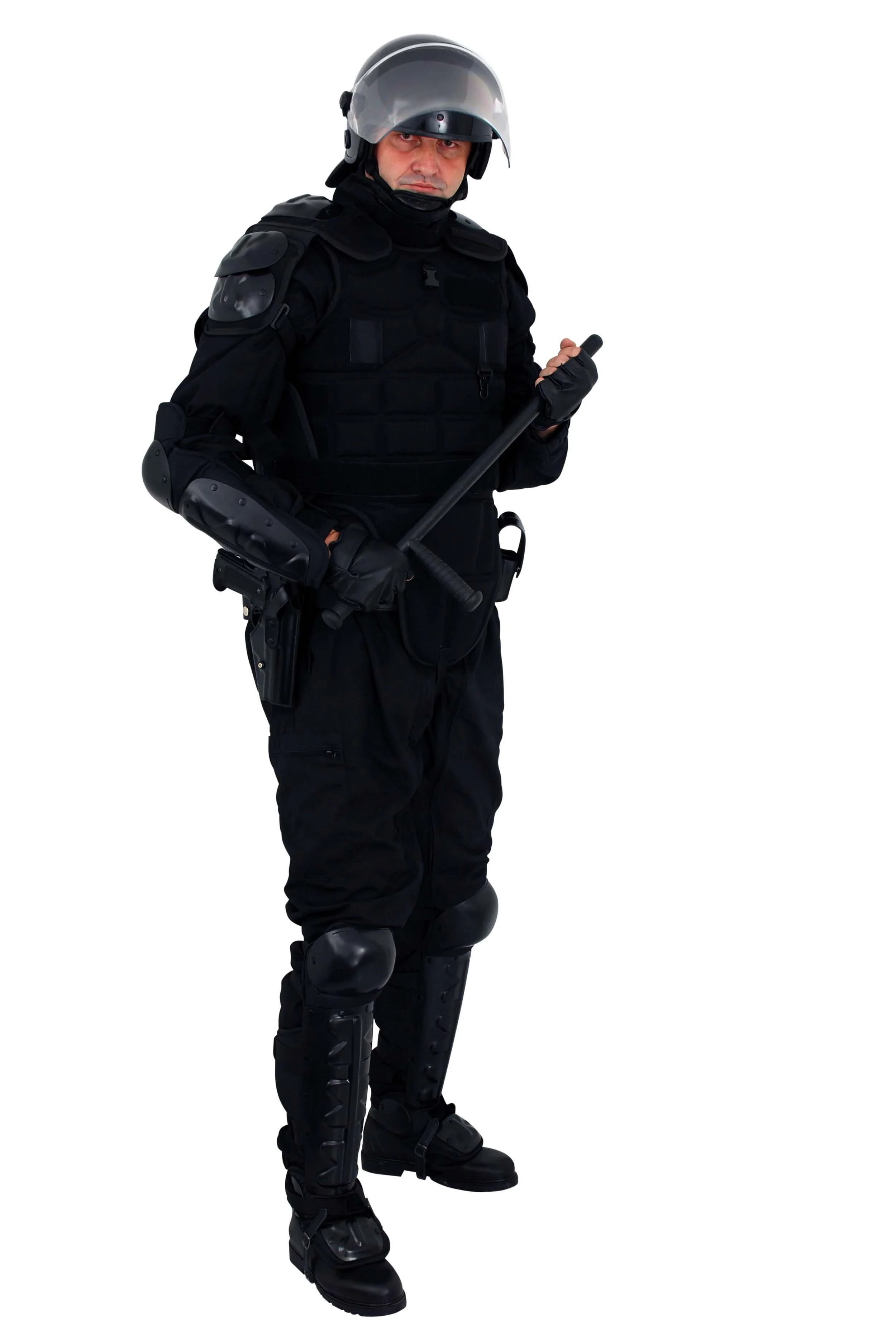
A helmet becomes a visor. A uniform becomes body armor. The officer begins to resemble a soldier. The equipment adds bulk, protection and authority - but it can also create distance from the people standing in front of it.
I became interested in the psychological change: the possibility that the costume itself could make the wearer feel enlarged, empowered, even superhuman.
I kept the body, but took away its volume
3. FROM IMAGE TO FIGURE
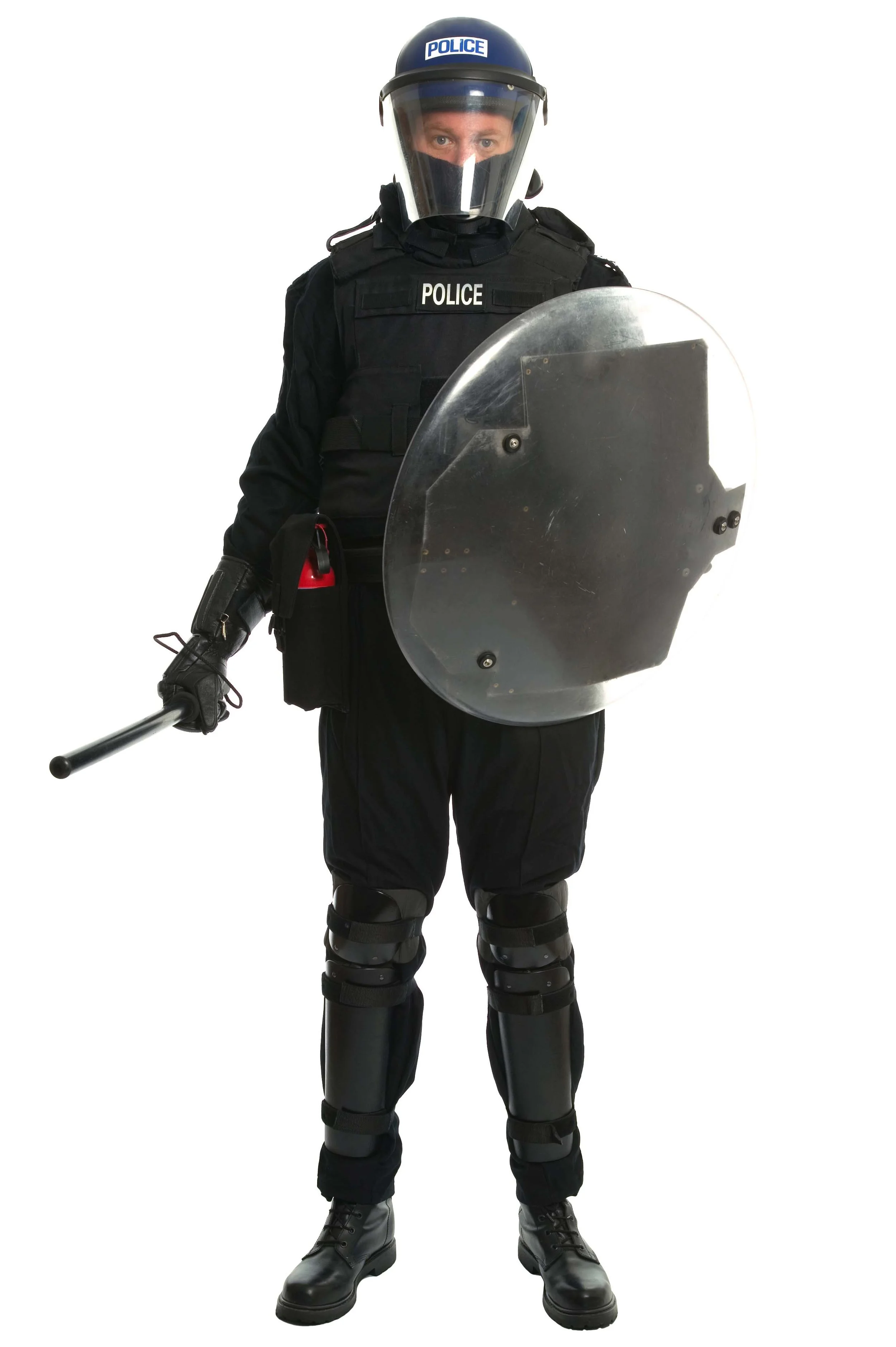
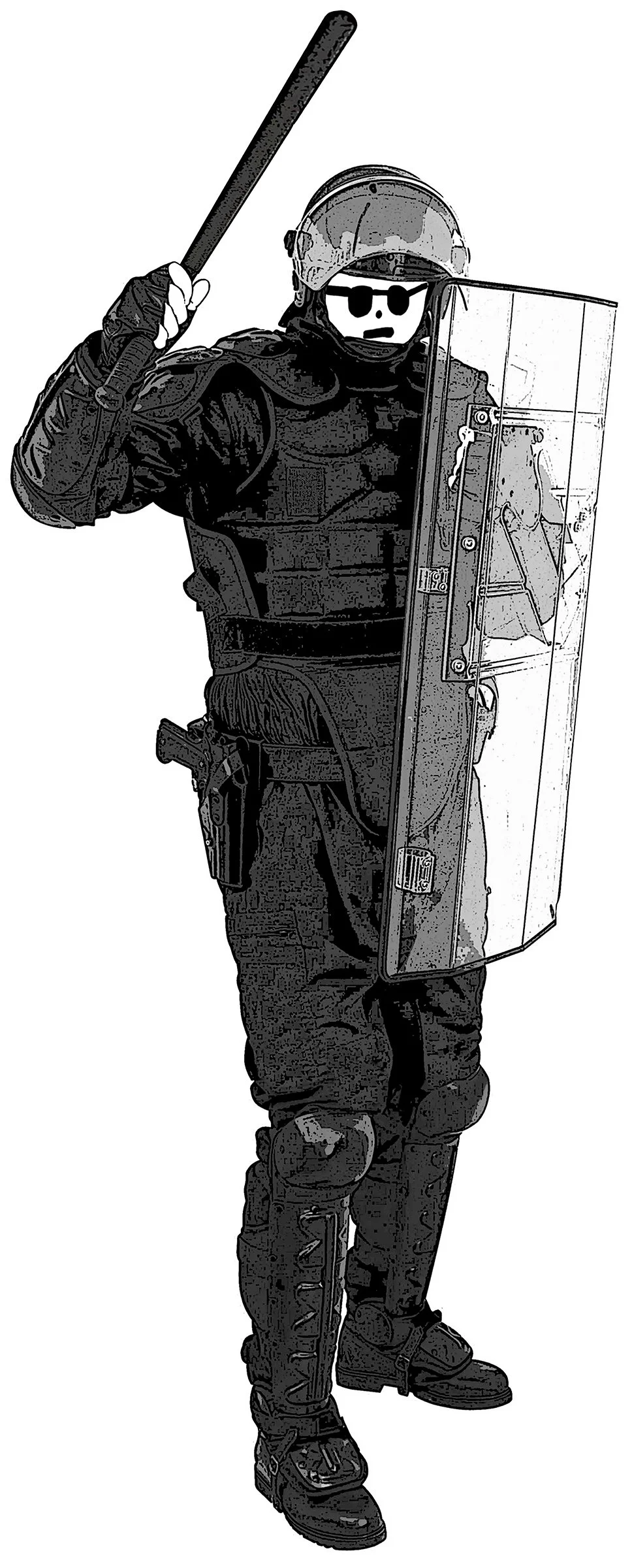
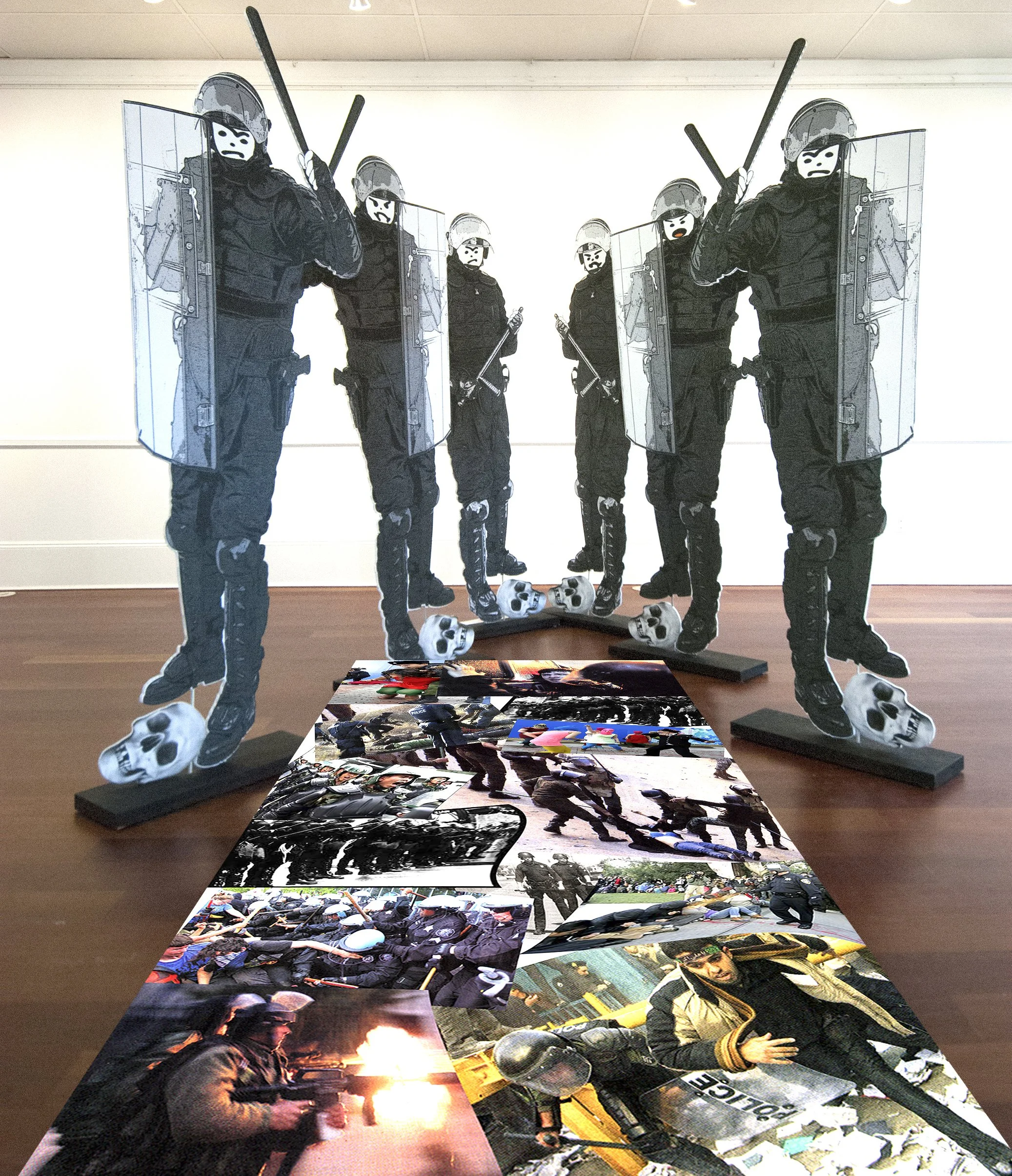
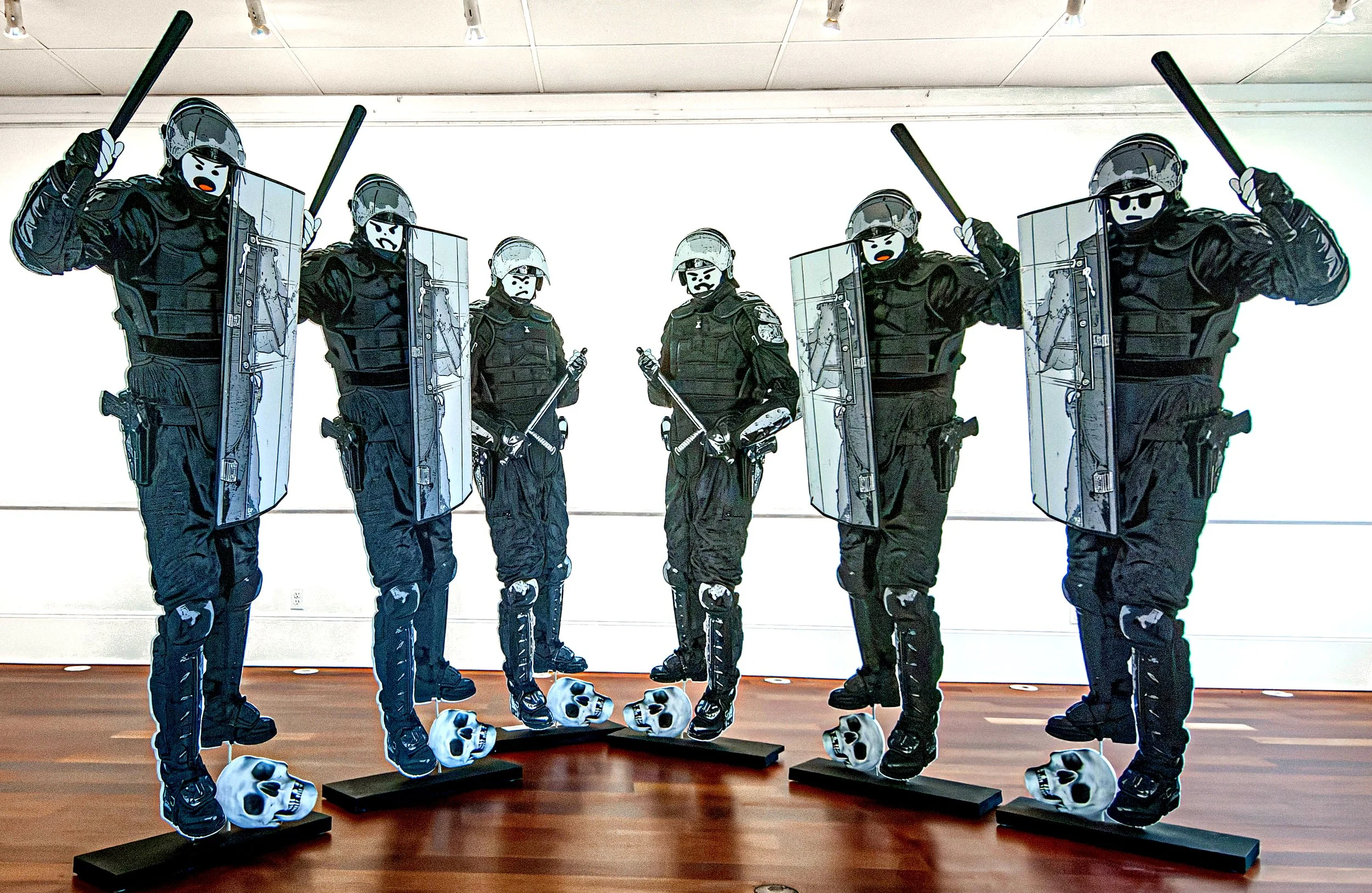
I printed the officers life-size onto a repositionable canvas-like material and adhered the prints to Coroplast that had been carefully cut to the outline of each figure. The image was reversed on the second side, so there was no back. Wherever you walked, the figure confronted you again.
I wanted to keep the impact at full throttle no matter where you walked viewing the work.
The armor gives the figure power.
4. THE FLATNESS
The flatness takes the heroism away.
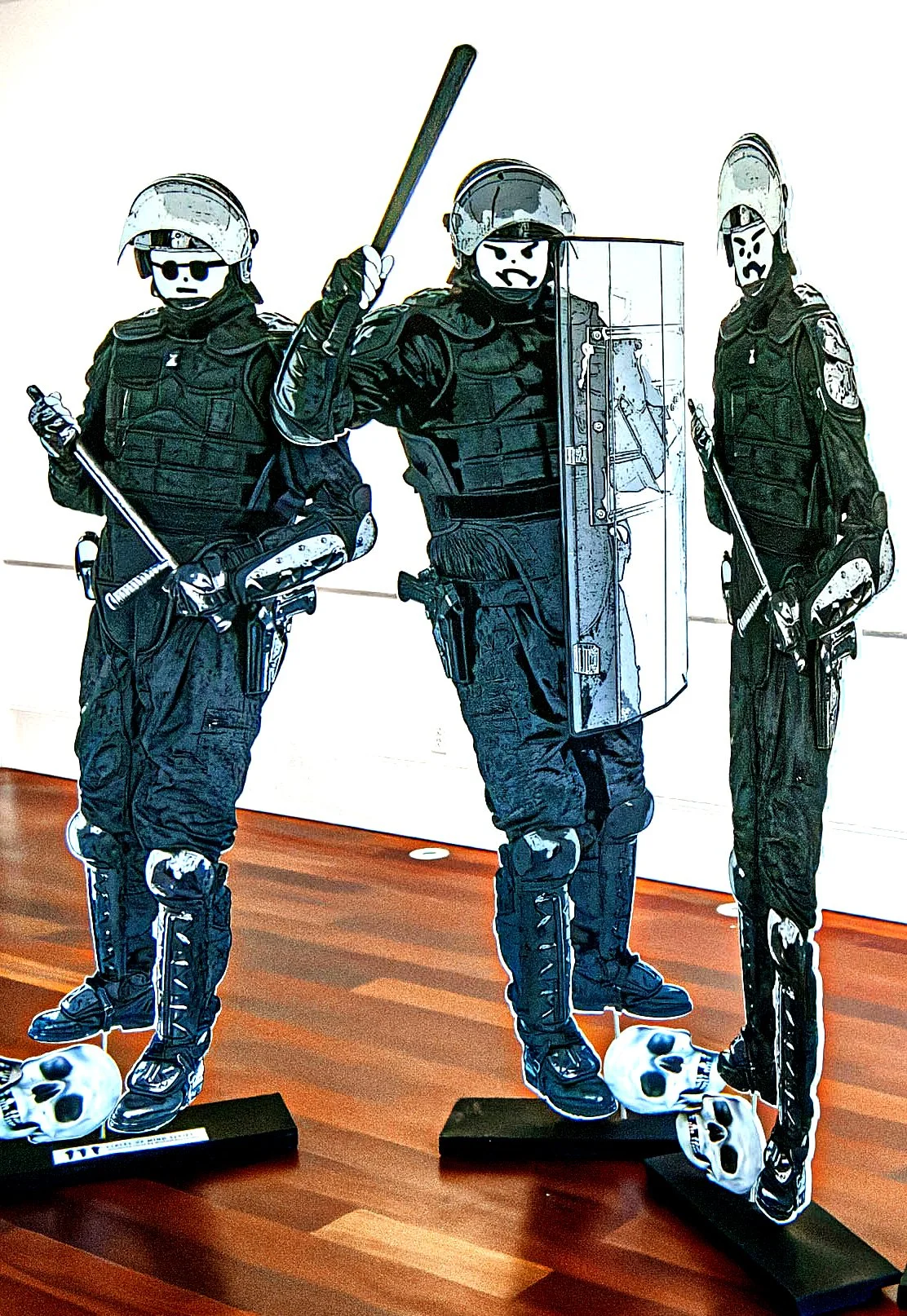
The flatness was deliberate. A conventional three-dimensional figure could easily become heroic simply through mass and volume. I wanted the opposite. From the front the officer confronts you at full human scale. Move sideways and the body almost disappears.
What remains is the identity created to threaten: helmet, shield, baton, posture, expression.
A few marks can carry a thought
5. THE FACES
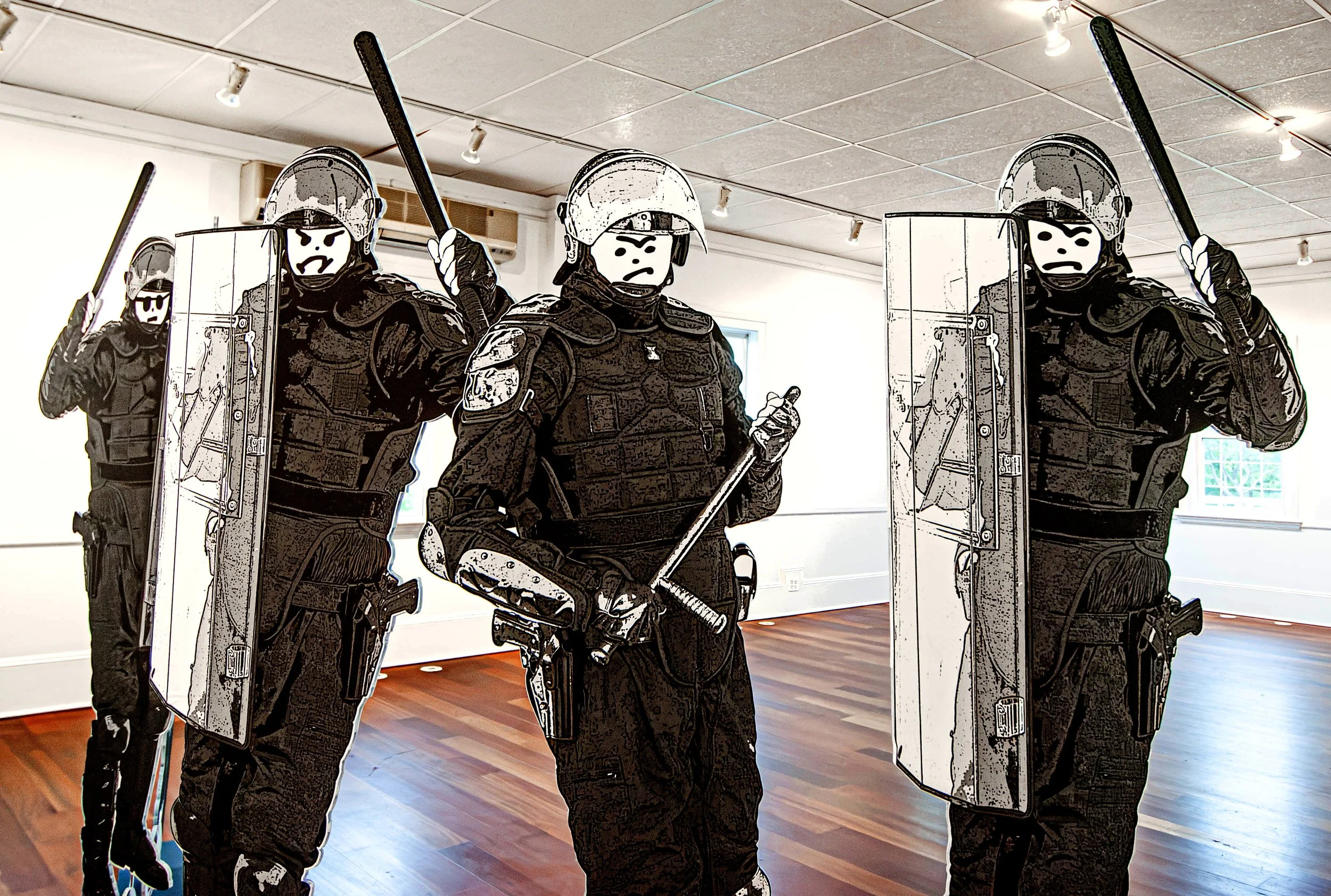
The faces came from my Portraits of Thought series. I had been exploring how little of a face is needed before we begin reading emotion and intention into it.
For Excessive Force I used a broad range - smiling, angry, stern, detached. I didn't want every officer to tell the viewer the same thing. I wanted people to find their own way into the work and contemplate their own thoughts about what they were seeing.
Something I had seen in Rome came back
6. THE SKULLS
CAMPFIRE STORY
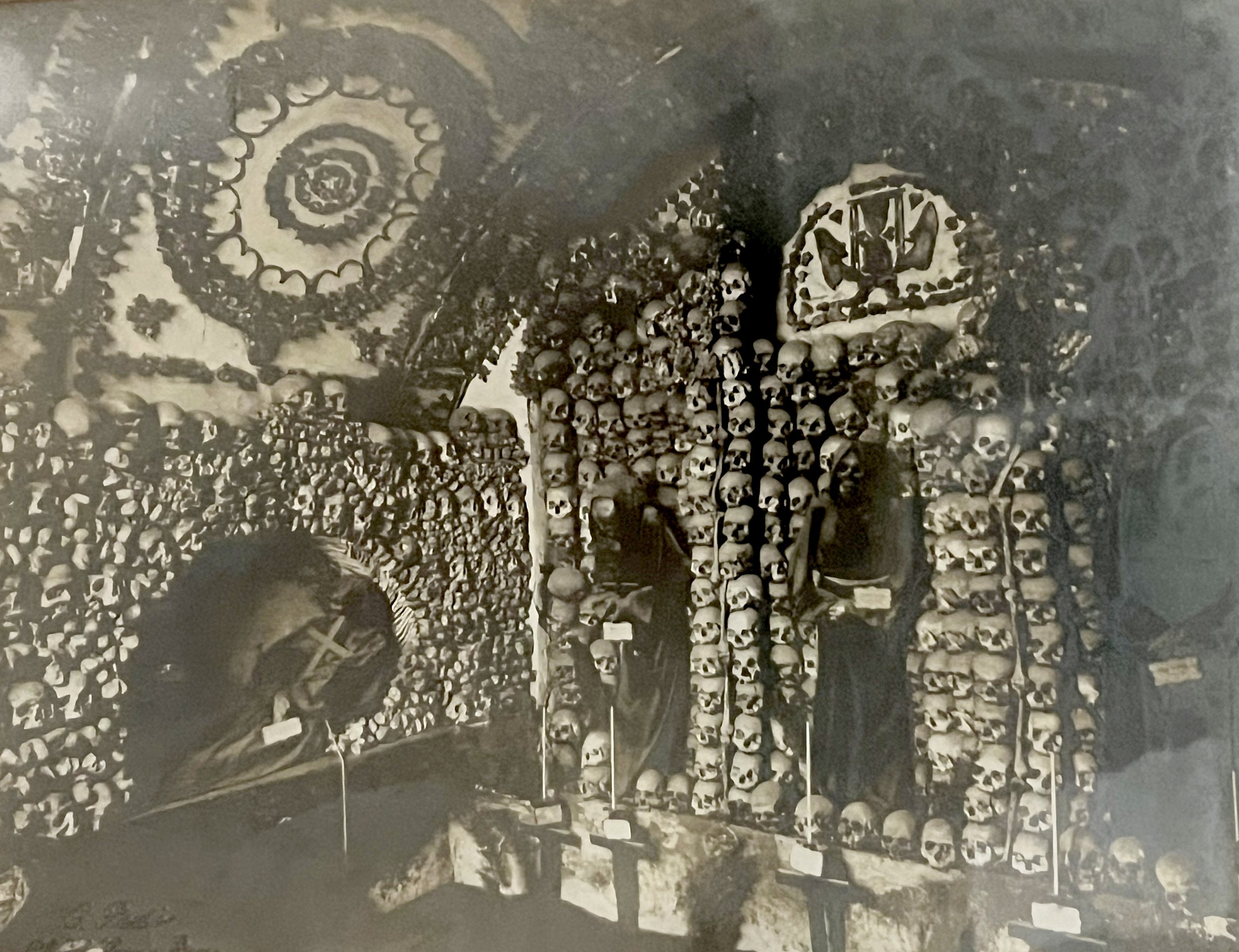
The old photograph my friend gave me
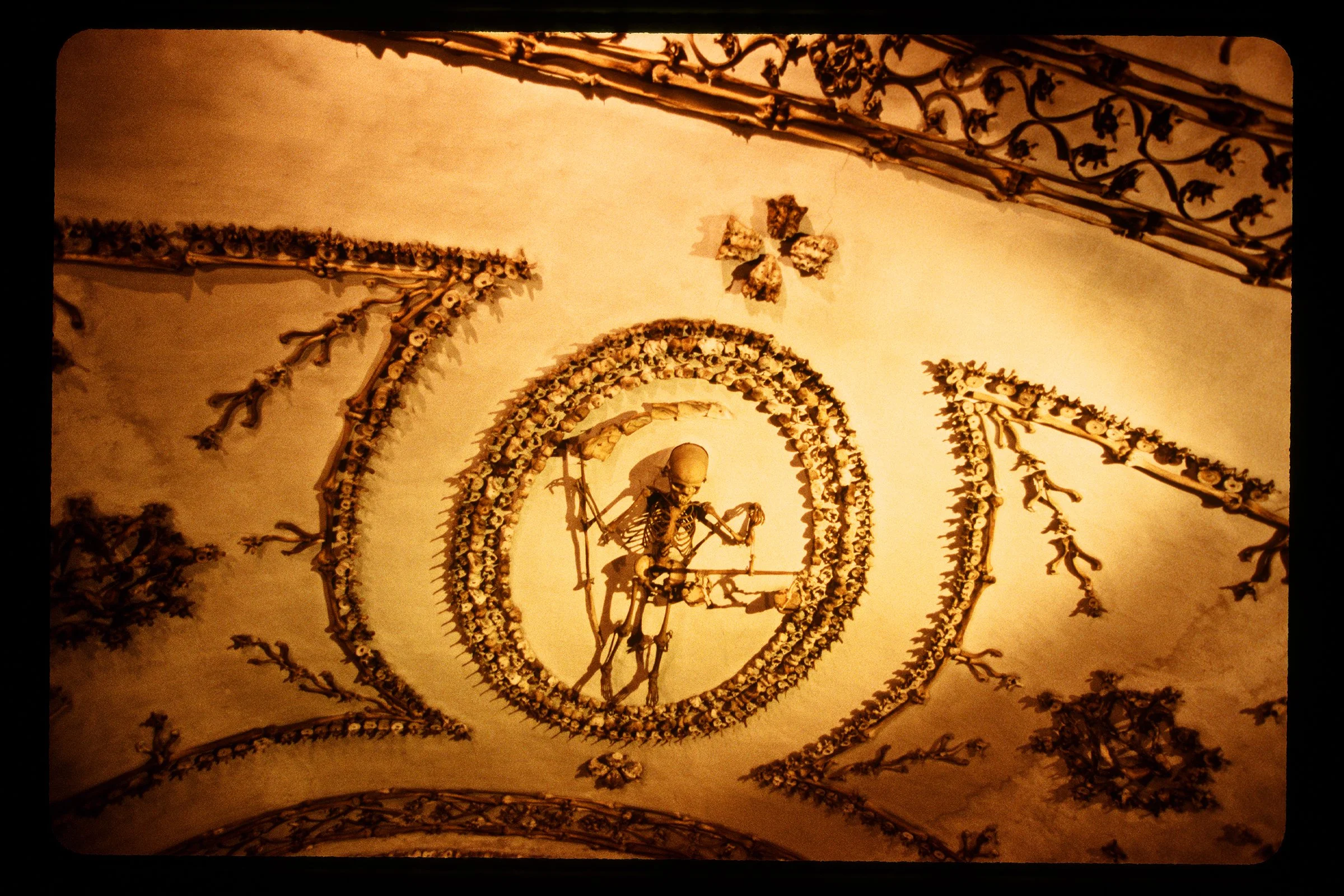
Rome - photograph by Michael Cardacino
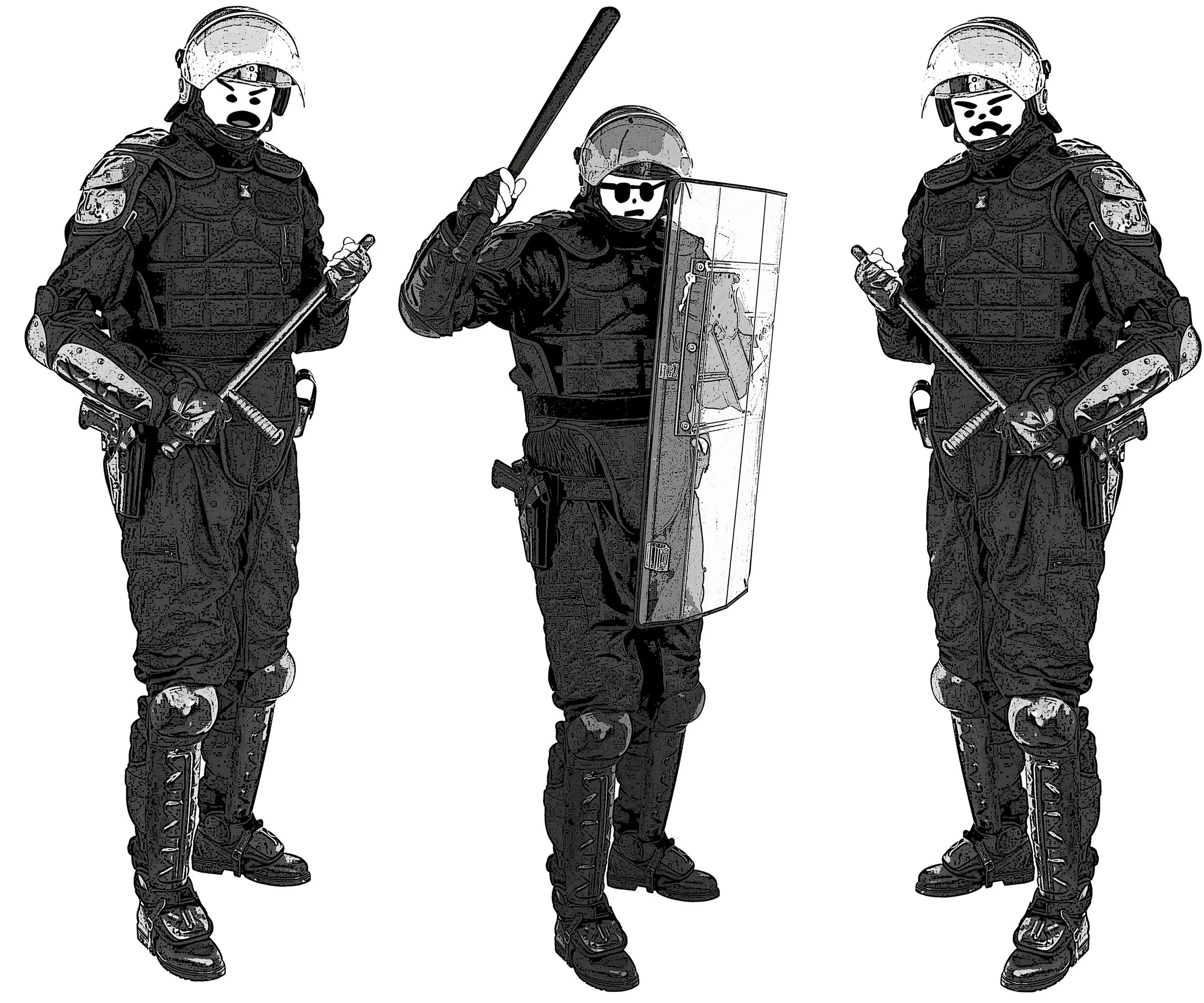
Early figure study for Excessive Force
Years earlier, a friend had given me an old photograph of the Capuchin crypt in Rome. It frightened her. I framed it and kept it.
When I eventually went to Rome, I wanted to see the place for myself. I took photographs there. The monks' bones had been arranged into rooms, patterns and elaborate constructions. I understood the Christian meditation on the fleeting life of the body. I was also looking at it through Buddhism and idea of not-self.
All of that armor projects permanence and power. The skull says otherwise.
Either way, the cruelty, hate and anger seemed pointless. So I put a skull at the feet of each armored figure.
The viewer enters the evidence
7. THE FLOOR
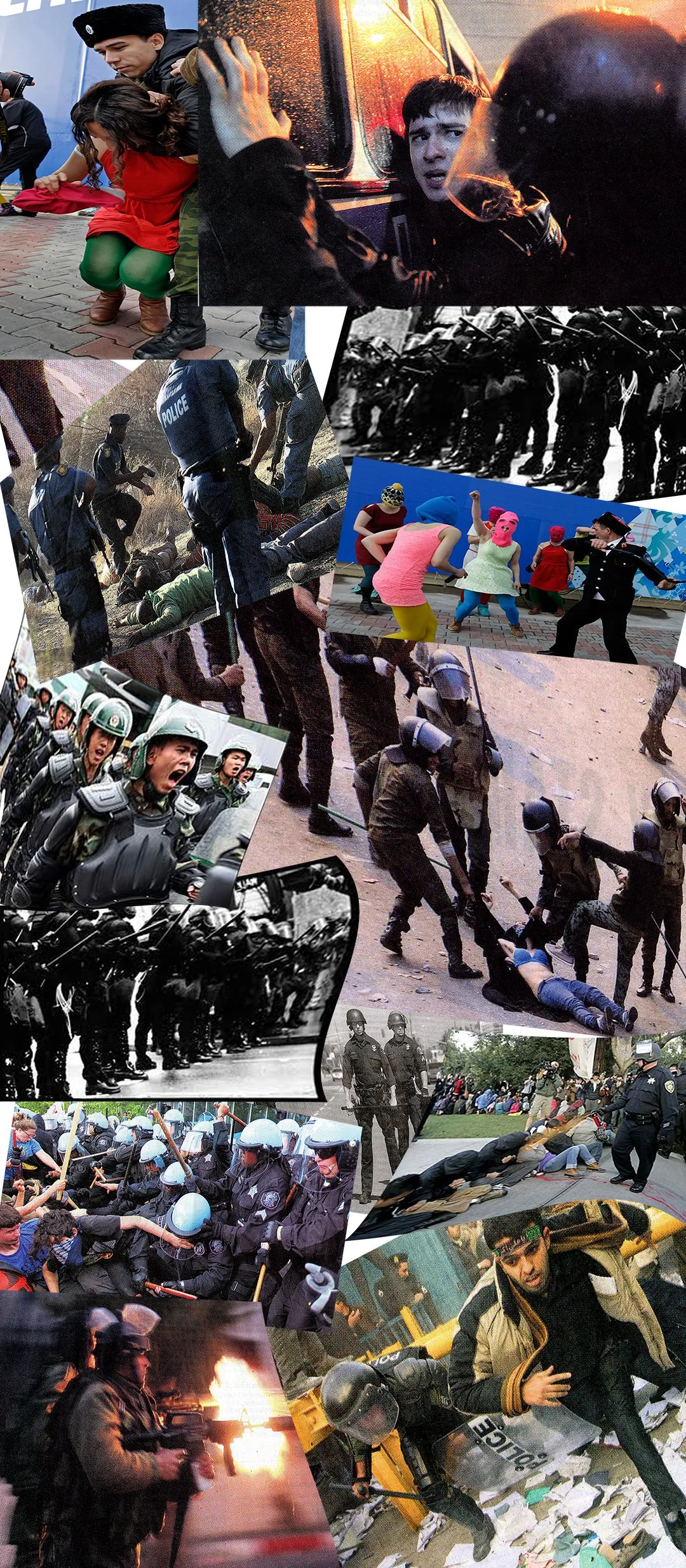
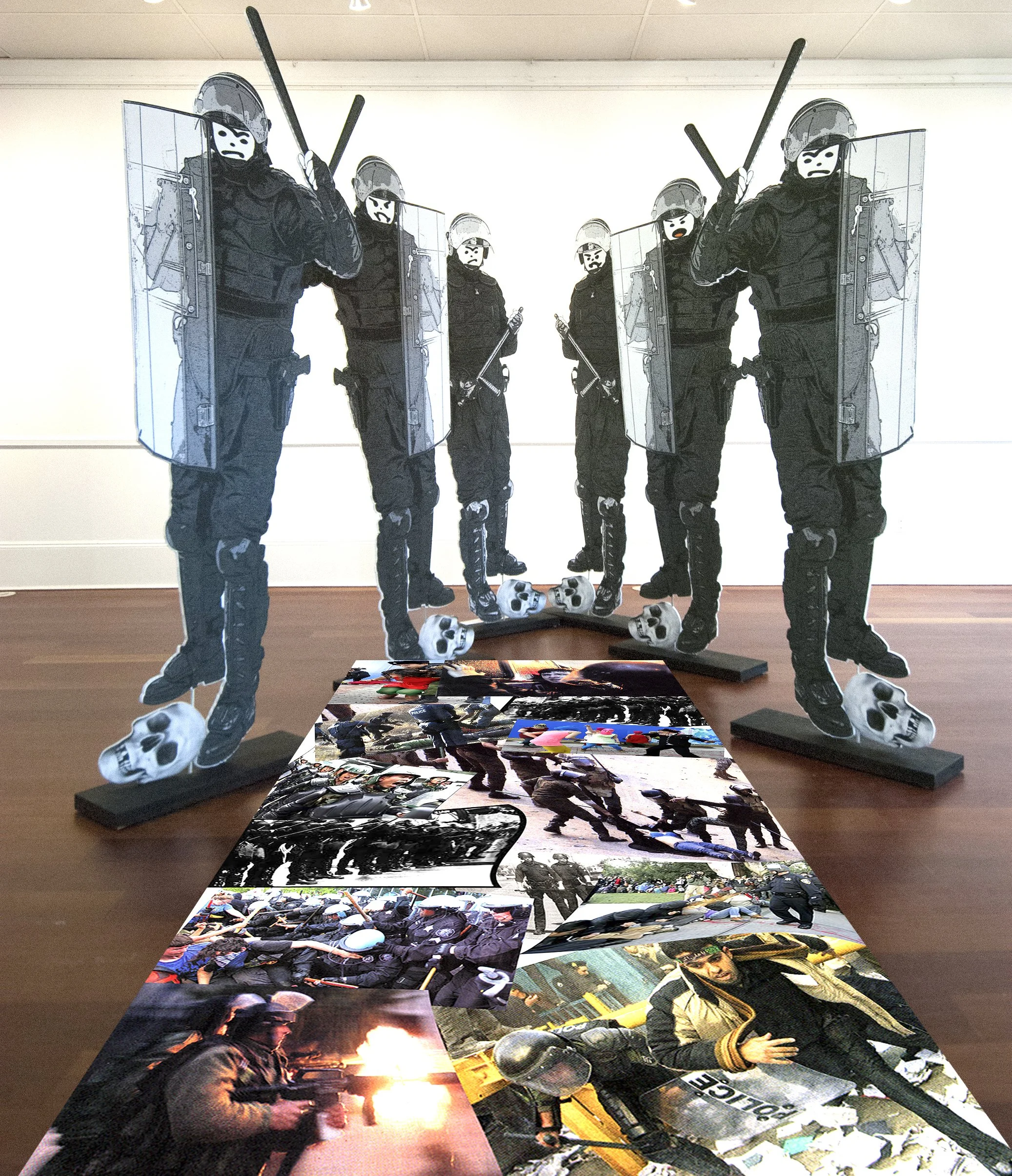
The long field of photographs on the floor was meant to pull the viewer deeper into an uncomfortable experience. The images were no longer safely on a wall. To approach the officers, you had to move toward them across the record of confrontation and violence.
You don't simply look at the confrontation. You enter it.
A flat image occupying human space
8. MAKING THEM STAND
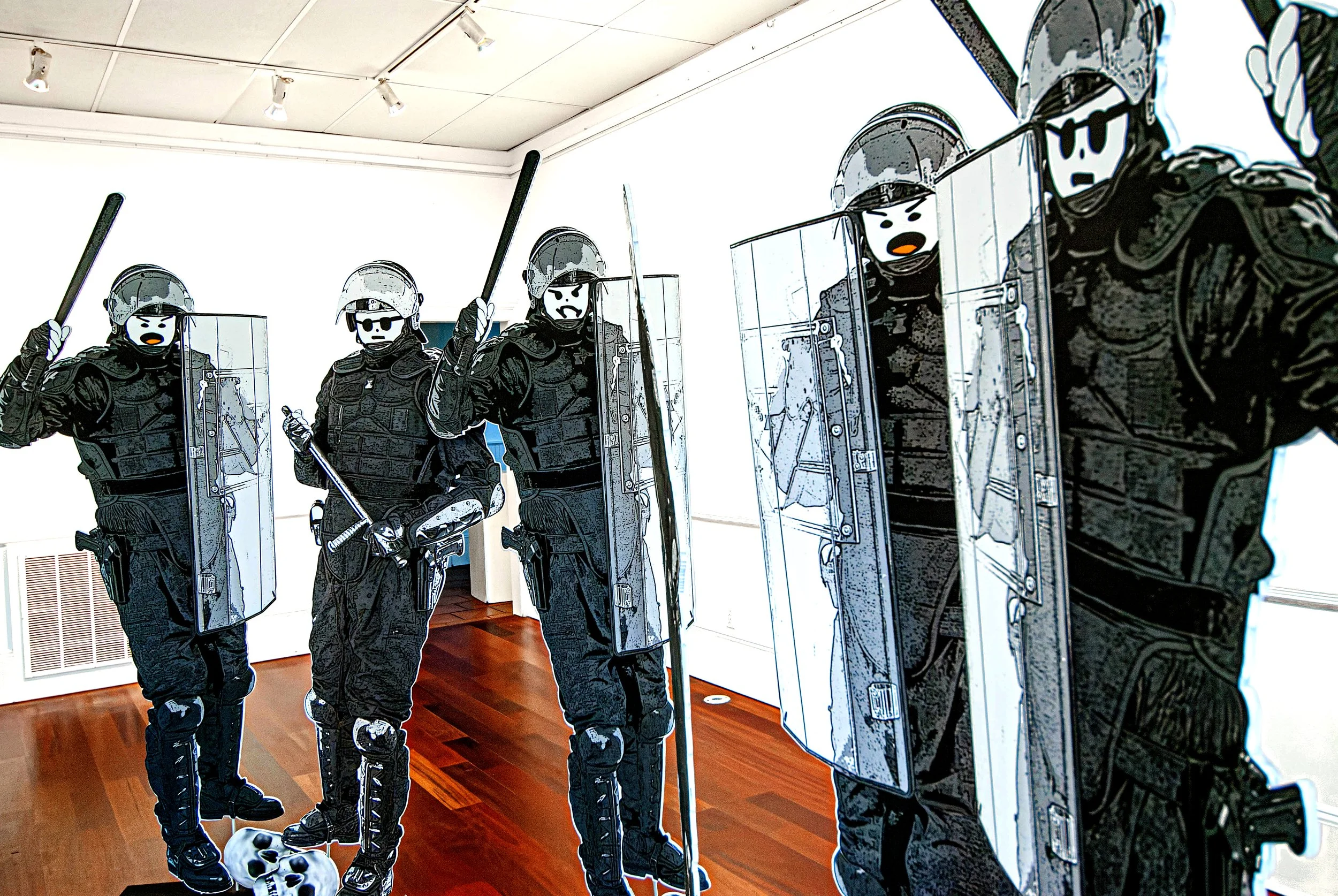
The support was simple. Threaded rods rose from painted plywood bases and slid into the tubular channels inside the Coroplast. That allowed the flat figures to stand upright without turning them into modeled bodies.
I used this method on a number of flat sculptures because the lack of dimensional body did not weaken the image. It could make the image more effective. The figure occupied your space without ever becoming a conventional statue.
EXCESSIVE FORCE
The armor adds power.
The flatness takes the heroism away.
What remains is a human-scale image of intimidation - and, at its feet, a reminder that no costume changes what we finally share.